EVI, Be My Valentine…
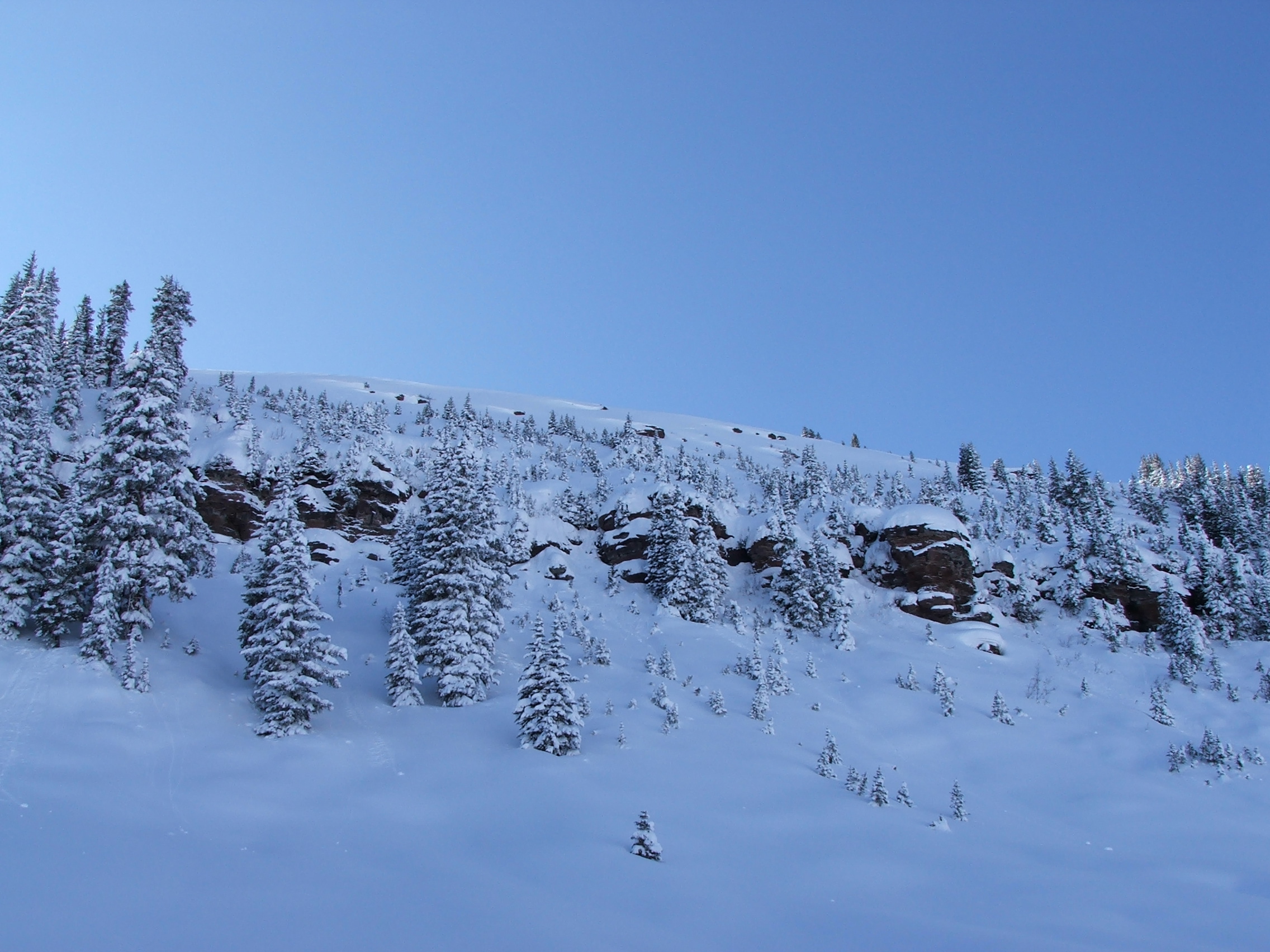
What better a day to grab that powder loving guy or gal and take them out to EV to get the love juices flowing? The overcast to broken skies with S-1 light snowfall and blending from light to calm winds ((L) 1-16 mph) didn’t deter the most discerning of inamorata/inamorato from blazing up the skin track to the top of Benchie and dropping in to profess their passion for the goods with some fine pow turns and periodic wails of pleasure and ecstasy. On the “Danger Rose” (oooh that’s sexy) one could profess that the “dangerous love” was at least considerable on the NW-S facing aspects… Those not blinded by the considerable chance at some likely “rough lovin” could get their moderately risky business done on the W & SW facing slopes. Tracks abound and no shame (recent debaucherous activity) in sight… the powder lovers were painting their affection all over the big white fluffy canvass with big S-Turns abound. Only a few dysfunctional examples of tracks seen hitting the top drops off Old Man’s, traversing skier left over the first cliffs in Old’s then directly over to the northern cliffs two-thirds the way down the open +35 degree avg. aspect, the prominent CDC cliff band. Not sure that relationship is really going to last, but one could conjecture that love makes some behave in some very incredibly peculiar ways.
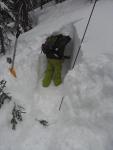
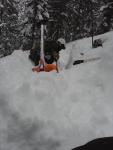
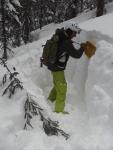
Linked up with Marty, the legendary wing-man himself, to not only get our powder fix of the day, but to also put a cross hair on our beloved snowpack and shoot it straight in the heart. We sought to identify a deadly problem that has been plaguing some unfortunate riders recently. We’ve all seen the recent reports of the very gruesome reciprocation that the star-crossed snowpack has taken out on members of the BC riding community. The trend of doom has been below treeline in some very precarious terrain traps and that is where some more careful examination is due. From the “hasty” and not so hasty test pits of the season, it’s about lovin time we drop some SWAG on this very problem. Freshly and stalely outfitted with the latest in snow-nerd standards, we figured it’s about time to throw down and get neck deep in the business. What is the problem that we are dealing with? In short, deep persistent weak layers releasing the majority of the top of the snow pack on an interface between the buried depth hoar and the upper “cake” layer of the good stuff. So let the intricate romance with our naughty snowpack begin… (this would be way more bad-ass with snowpilot, but whatever).
2/14/2012 @ 2:30pm on Forgotten Trees with an elev. 10,200-10,400 (estimated from topo).
Small clearing in trees on N-facing Aspect below treeline of 30 degrees.
Sky: Fluctuating from broken to overcast. Wind: Calm to Light. Temp Air: -6.5 deg C. Precip: Very Light (S-1).
Boot Pen: Balls Deep, Yeah, that’s what she said… Type: Profile Pit. Temp Surface @ 150cm: -6.5 deg. C
No Red Flags besides the low-moderate obvious wind loading of leeward aspects.
<150 DF’s (decomp & frag. precip particles) 1.5mm F+ -6.5 deg. C
140 DF’s (decomposing & frag. precip part.) 1.5mm F+ -6.0 deg. C
130 DF’s (decomposing & frag. precip part.) 1.5mm F -6.0 deg. C
120 FCsf (near surface faceted particles) 1-2mm F -5.5 deg. C
110 FCxr (Rounding Faceted Particles) 1.0mm F -5.0 deg. C
100 RG’s (Rounded Grains) 0.5-1.0mm F -4.5 deg. C
90 RG’s (Rounded Grains) 1.0mm <95cm 4F -4.0 deg. C
80 RG’s (Rounded Grains) 1.0mm 4F -3.5 deg. C
70 RG’s (Rounded Grains) 1.0mm 4F -3.0 deg. C
60 DH (Depth Hoar) 3.0mm <60cm F+ -2.5 deg. C
50 DH (Depth Hoar) 3.0mm F+ -2.0 deg. C
40 DH (Depth Hoar) 3.0mm F+ -2.0 deg. C
30 DH (Depth Hoar) 3.0mm F+ -1.5 deg. C
20 DH (Depth Hoar) 3.0mm F+ -1.0 deg. C
10 DH (Depth Hoar) 3.0mm F+ -1.0 deg. C
0 Ground
Did a very nice ECT (Extended Column Test) 30cm deep X 90cm wide X to 120cm deep from surface, back cut out.
Results yielded: ECT23Q3(PC)… the whole 150cm down to 60cm collapsed on the interface (if you can remember the December surface hoar produced by endless clear days and cold clear nights) ~60-63cm is where the ECT collapsed but did not shear. This indicated a collapse and even propagation, but no sudden planar or resistant planar shear @ 30 deg. So that would put us at ECTP23. Read from that what you will… in leymans’ that’s a deep persistent weak layer that will propagate distances, collapse and cause instability in the snowpack, hence, most aspects on the CAIC Rose being rated as considerable. Watch out for higher angle slopes that will cause the upper layer to collapse as well as shear and slide.
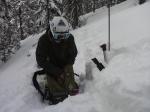
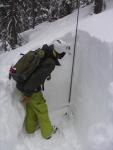
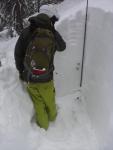
That’s all the snow-geek and SWAGger I got for ya! hopefully you were suave and savvy enough to get your significant other’s adrenaline and love potion pumping with you’re superior shredability out in EV today. If you didn’t here’s some snow porn to help you thru tomorrow… but remember, never trust a hoar, no matter how deep you bury it (Whammy!).
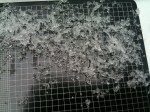

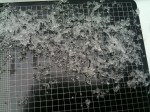
2/12/12 5 Second Rule/ Trip Report
Headed up to see the after effects of a big Saturday. Like heading into a trashed frat house after the cops come, the area was deserted and littered(with tracks, not Old Style beer cans) . Fully expecting to see some slide remnants in the bowls, but the reports of a slide in Benchie were just spray. Forty or so tracks in plain view. Plenty of snow testers exploring all aspects. Maybe a small fracture on skiers’ left side of Benchie, but nothing real significant and hard to tell as the area was laced with tracks on top of the possible remnants.
Greybird day and temperatures finally cooling off with the incoming front. No recent movement in Old Man’s, the right side stamped with tracks and a few poking into the first gully skier’s left of shrubbercross alley.
Took full advantage of the stability and headed left middle gully for the first time all year. One might even call it a, gasp, SKI CUT!!! Just kidding, can’t help myself. The snow was settled and surfy, no movement at all the run. Still some reef in the roll over gullies, but finally getting covered.
Some advice. 5 second rule. If you are going to delve into the middle of any open areas, you need to be able to ski your line all at once, with speed, without stopping on the cliff bands. Otherwise don’t bother. CMHing through these areas will get you pounded.
Headed out to the ridge and saw two small(30 ft wide) slab pockets had ripped on the lower skier’s right side of the West Wall. These were small shallow areas with no propagation or run distance (50 ft), an effect of the recent new snow on the sun baked east facing West Wall giving way.
Found good snow in the Forgotten Trees, shaded north facing, it provided good knee-deep pow skiing. Hit the lower cliff band in the trees and fractured a 20 foot circle of snow. Just collapsed, didn’t run but stopped me dead in my tracks. Time to look around and enjoy the solitude of the moment and the light snow starting to fall in the trees.
Found an undisturbed tree pocket next door to my landing to do a quick CT test and snow profile. 38 degrees, north facing, untouched. Perfect. Again not too much difference in the snow profile from other recent pits. 10 cms of fresh snow of 55 cms of slighlty denser old storm snow. At the bottom the less than fist density 3 mm facets still there to the ground.
105 cms total depth, -3 C air temp, -1C snow surface temp. CT column results were a little different from a couple of days ago.
CT-2 Q1 at 95 cms. Old snow/new snow interface, just the top fluff.
CT-17 Q3 at 35 cms. Again within the 3mm facets, but ragged and uneven.
Only did a single column, so no back up for the results. Just lots and lots of tracks. Lots.
Silverton Avalanche School Reprise
Beacon, probe, shovel, saw, collapsible ruler, Avalung/ABS float pack, First Aid kit, Snow Study Kit, Klean Kanteen (camel hoses freeze), knife, compass, headlamp (you never know…) Sunscreen, chap-stick… This damn pack is like forty pounds now… Extra hat, extra pit gloves, cordelette, big orange Black Diamond ski straps (nicely holds ridiculously fat skis/poles together and make wonderful tourniquets), skis, poles, skins and AT Boots. Whew! Am I missing anything? Oh yeah! Pen, notepad, “The Avalanche Handbook”, “Staying Alive in Avalanche Terrain”, “Human Factors in Avalanche Accidents”, “Heuristic Traps in Recreational Avalanche Accidents: Evidence and Implications”, “Snow, Weather, and Avalanches: Observation Guidelines for Avalanche Programs in the US”, the AIARE Field Book and a bunch of Topo’s.
My God, just a few thousand dollars in gear, a couple thousand pages in texts and articles and it’s no wonder that its so easy for armchair avalanche quarterbacks to get outfitted at the local shop, take a couple runs in dangerous terrain and have the hubris to act like an authority or an expert… better yet, an “Institute” (I hope you can understand the sarcastic humor, if not, please just save your brain cells and Google “Backcountry Skiing” on Youtube and enjoy the safety of your parents’ basement shredding virtual pow.
The point I’m going to excruciating lengths to emphasize here is that for a given amount of time, money and reading effort, anyone can get the gear, read some print and get out in the backcountry and slay like a hero. And there are a staggering amount of these “Tom Brady’s of the Backcountry” hitting our favorite zones and stashes. The crucial link that is missing in this already weakened chain is a good dose of education, hence, the backbone of this textual poetic waxing.
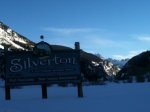
I was fortunate enough to be able to forego the Super Bowl weekend in the “Male-Valley” and head down to the legendary town of Silverton, CO. We have all seen the ski-porn, the sick double/triple stager lines on film and the limitless attitude/mindset of the popular culture powder skiing industry that has turned an old historic mining town into the Mecca for extreme powder skiing in the lower 48. It all looks sweet on the silver screen, personally, I love the segments and it admittedly sucks me in every time. But again, the big factor missing here is education. Never once do I see in these segments any kind of emphasis on getting educated/trained and what it really takes to drop such aesthetically pristine lines complements of Red Bull or Warren Miller.
Contrary to popular culture’s awareness, Silverton is also home to the “Nation’s most respected avalanche education since 1962”. If you want to learn from an expert, professional or a professional expert, Silverton Avalanche School is your ticket to priceless knowledge and they are an actual bona fide licensed “School”! I bagged Level 1 there and liked it so much, I came back for more… Level 2.
Getting the Level 1 or 2 cert. is not a license to post up and become an authority. It’s more like the fundamental knowledge of backcountry education. Where tools and info are presented so that the students can start to build a solid foundation of knowledge and a “tool kit” to become educated travelers and observers of the “Off-Piste”. Level 1 and Level 2 are the beginning steps in a lifetime of learning and exploring the backcountry. After one or two of these important steps are accomplished, we should all be able to enjoy and play nicely in the sandbox… and be able to speak the same language.
To be quite honest, the SAS Level 2 is more than the 30 student classroom can handle in four and a half days of drinking from an informational fire hydrant. There is so much info and particular nuances to pay attention to that, it is surprising people don’t leave the San Juan’s dumber than when they came. I certainly was humbled and reflected on all my stupidity and bad decision making prior to my formal Avi education… It makes one realize how very little one knows, or thought one knew! Thank goodness for the instructors’ expert and professional presence of mind to reel in the blind sheep as soon as they lose the forest for the trees or the pasture for the grass, however one can make a synopsis out of it. And then take the students out into the real backcountry environment and reestablish the application of theory to actual backcountry praxis. In a way, it’s an education for both the teacher and the student. The student is able to learn and apply their knowledge and Avi skills, while the instructors observe the human nature of groups in the backcountry. Win-Win, we are always going to be learning, whether we are Mr. Miyagi or little Daniel-san. But once school’s out and we’re on our own, those pros and experts won’t be there to coral us from our idiocy. Hopefully, we have been able to choke down as much info as we can and not lose the big picture.
This trip, like any, was a real eye opener, a quintessential microcosm of the backcountry public. From mountaineering late teenagers to off-piste shredding silver foxes and foxettes and everyone in between, these people are our backcountry community, our family. Fathers, mothers, sons, daughters, brothers and sisters and we owe it to them to make sure that when we are recreating in the backcountry that we posses the skills, tools and knowledge/education to be able to look out for one another and to be able to save each other from our own stupidity/bad decisions or just mother nature being the cruel bitch she can sometimes be. I’ve made some really dumb mistakes, poor decisions and I am probably due for a few more, but being Avi-educated has allowed me to mitigate those human errors and become a better member of the backcountry community.
For those in the audience that want to just say “screw it” and go drop in on our favorite zones take heed. You really owe it to yourself to go and get educated first and foremost. It will make you a better rider and a better human, not to mention a hero if you are put in a situation where you will have to be the one to save a member of your family/community (the respect is also owed to them). The whole purpose of my involvement here is to raise the awareness of the uncontrolled environment such as EV and to help raise the bar and caliber of the typical shred-head that slays it out there. We are not egos yelling from across the valley that “you’re a gaper” and you should “turn your beacon on because we say so”… we are a part of the community that care about the well being of anyone who loves to ride where we do. We are more than willing to share our stories and experiences and hopefully add a little humor to the mix to keep it fresh.
If you want to know, ask questions. If you need the education, check out Silverton Avalanche School, Friends of Berthoud Pass or your local community colleges, amongst many local guide/education services. There are awareness classes, Level 1 and 2 certs abound. There are awesome people at these organizations and future friends and riding partners. It’s an obvious win-win. You won’t leave any of these places an expert in Avy-savviness, but you will leave with the tools and skills to get out there and be safe when you are traveling and riding avalanche terrain. But lastly, if you haven’t noticed, this is the most notoriously dangerous Colorado snow pack in recent history. If you haven’t taken advantage of the opportunities to go get some education, this is a better time than any. This snow pack laboratory is probably the best you could learn from. It opened my eyes wide and taught me many important lessons. Don’t really need to be preaching to the choir, but the choir does need to learn a few new songs now and again…
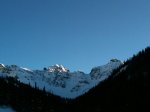
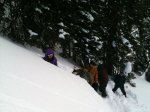
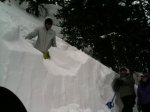
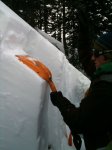
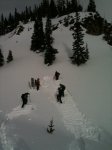
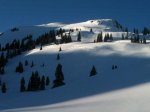
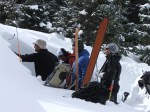
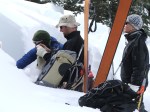
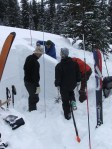
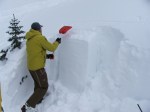
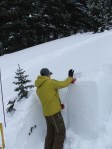
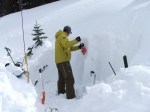
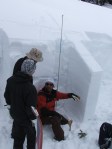
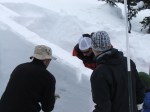
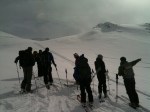
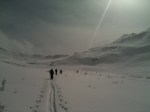
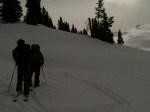
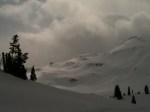
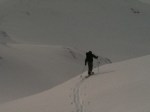
Some Pictures for your view pleasure and see you out there!








2/11
Didn’t happen. Balmy, springlike temps and wind created slide problems again in lower tree areas. A buddy with a near miss in the West Vail trees in a lower aspen glade. Some hearsay reports of activity in EV, but will have to see today.
2/9/10-2/10 Chance of Snow
Chance of snow. Finally. No hundred percent chance of sixteen inches that leaves us like a jilted bride at the altar. Chance, that’s all we ask here in the Vail valley. My favorite forecast.
Currently snowing here, and Thursday/ Friday provided the best EV skiing of the year, but with different stability indications. Yesterday, stomping the edge of the yet to be formed cornice of Old Man’s with skis sent the 60-80cm of wind load to the egde of the frying pan with an easy shear, but did not propagate or step down in the rollover gulley past the first flats. (This measurement is rough and only is at the very top of the run at the start of the rollover where the cornice usually forms.)
Friday, at the same place, with renewed wind load even deeper, around 80 cm, the same test produced no shear and moderate cracking that didn’t fully break. Soft slab blocks stood perched on edge, but refused to drop and run.
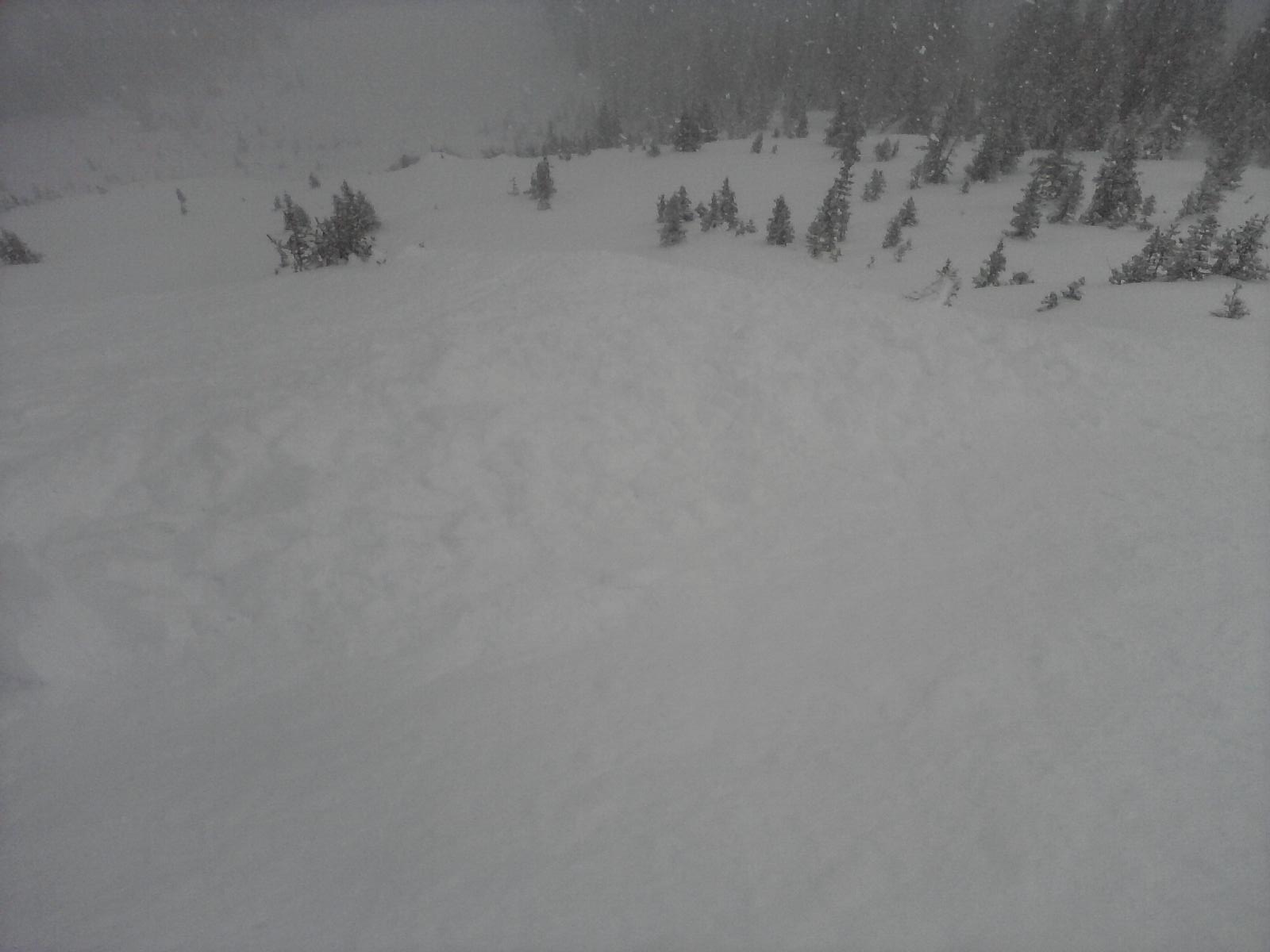
Thursday
Skiing was excellent both days, the snow on Friday was thicker and sprayed like spoonfuls of mashed potatoes on each turn as we got into the midddle of the bowl. The snow stayed knee-deep and fresh all the way through. Watched a group of four ski left Benchie with no results. The tracks in West Wall, Tele Line, Benchie produces no slides that I could see. Didn’t have much movement on my run and only minor sluffing running the right middle concave gully. The following four tracks had only minor surface pockets moving a very short distance. The upper part of the pack seems to be stronger than it was a week ago, Definitely interesting to see the change in 24 hours with the same rudimentary test in the same place.
Super big Saturday with the Teva games in town and the mountaineering race ends up at Benchie. Will racers and EV skiers be battling for the same skin track? Much pressure this weekend and hope the seeming increasing stability is for real.
Also, check out this TGR blog if you haven’t already.
2/8/12 Meadow Mountain/ EV Trip Reports
Took advantage of the perfect weather to do a midnight skin up meadow mountain under the full moon on Tuesday with Luke and Paulie and dog. First group gathering gearing up for the AK world as it is now a countdown in days towards the end of the season. Surreal snow world cast in a ghostly bone white light, the trees and skin trail glowed brightly under the moon. We worked our way upward through the meadows and aspens while snow machines rallied around us, transferring partygoers from the trailhead to the cabin for a full moon party.
After a couple of hours we arrived at the cabin, drawn into the cabin by firelight and laughter. We arrived and were greeted warmly by the Mushroom people, speaking in tongues and smiling, They welcomed us to their fire with clicks and whistles and we obliged them. The light from Minturn and Vail were visible and the Gore range rose up in authority, bathed in blacklight.
The ski down was low angle and variable, pockets of stale powder, interrupted by frozen track chatter. Dog decided that snow machines were more fun and took off on us. Luke got a second lap around midnight back to the top by snow machine and a bonus ski down with the wayward mutt.
Headed out to EV on Wednesday afternoon in rising westerly wind and lowering, thickening grey clouds. Haven’t been back in some days, so again interested in what has transpired since last week. Hit the poma and was warned by an older guy passing by on the catwalk about the danger in the West Vail Chutes.
Top of the world and I saw tracks beaten in the usual places. Much of Benchmark is unrecognizable from last year and unskiable due to low snow, so the skier’s left side is hammered. Right side of West Wall, Tweeners and Tele Line all had tracks. No recent slide activity that I could see.
First time able to ski left past the initial cliff band and into the right center of Old Man’s. The upper scarp is still rock hard, Supportive dense wind buffed pow skied o.k and the roll over areas through the two cliff/reef areas held fast. About a dozen tracks littered the skier’s right side middle of the bowl, while the CDC area remains unskied. The bottom of Old’s had covered mounds of old debris.
First time cutting over to the MVP area from Old Man’s, wanting to see how the Forgotten Trees were skiing. Upper turns in the trees were more stale cake but fresh, as most of the other tracks headed straight. Came upon the first cliff band and side-stepped off a three-foot ledge onto a briefly steep(40 degree) open tree pocket after the rocks. Sunk to the ground and fractured a small area under the rocks that disintegrated like sand.

Took the opportunity of standing on terra firma and looking at a small but distinct fracture line to take a look at the snow. Not much change 2-3 m facets less than fist density, topped by slightly denser old and new storm snow. Any column cut still can’t stand on its own and fractures Q3 within the facets. No real surprise in stability. Still around 110 cms.

Ended up skiing 30 ft wide refilled bed surface pockets in the trees to get to the exit. Traversed out onto thin and crusty east face and onto the track out to the bus. Thin fast and littered with stumps and bushes, it is not fun. Biggest March ever.
Bizzaro Vail
Haven’t been back in a few days as the skiing was marginal last time I was out. I’ve been taking advantage of the continuing spring weather to get back on piste and start to put the work skiing wise in for the upcoming AK trip. Almost died off the Avanti catwalk yesterday as I hit it too straight on and rocket shipped to the flats. Recovery training, check.
Greybird Thursday morning and I’m headed back out to see what if anything is going on. No new precipitation, but forecast is hopeful for today and tonight. Stuck on the one fifty ish mark for snowfall, La Nina needs to kick it up for the next three months.
Reflecting on the season, and though it has been the leanest in terms of snowfall in my time here, its honestly been one of the most interesting in terms of avalanche cycles and human nature. Things like lower Sugar mountain and Windows, sliding for the first time in many years. In bounds avi fatalities, but none outside the gate(luckily and thankfully). Very warm spells after snows and no real continuous snow for more than a day. It just has been off. John the EV bus driver, compares this to the 82-83 season, when a powder day didn’t rear its fluffy head all year. However, he said the next year was the biggest year he’s ever seen. Interesting local weather observation from someone been here for a few years.
In terms of human nature, the reaction to EVI, (and whatever demon shape you choose to let it take in your own perception) has been equally interesting. Culminating a stalk/showdown in front of Gorsuch, the hype and misinformation has hit its peak. This blog was started with the loftiest of goals and best of intentions, but we all know what road was paved with those. Fell for some of the baiting and I regret that. Otherwise, the idea of providing simple info for EV is something that has merit and if nothing else has got me to sharpen my own snow skills and appreciate the runs I’ve had back there. I It’s a great training area for big mountain skiing and its location and ease of access next to the biggest ski complex in North America represents some unique challenges in terms of access and safety.
I think my lesson learned is that skiing is an individual sport to the core. All those ideals of appealing to the EVI “community” is really appealing to a thousand different ideas of what is right in terms of line choice protocol and group safety. No real surprise there, I guess. But the reaction from people I know locally, that know the amount of time in I have out there has been the most enlightening. A measure of respect was called for, but not given. The FFHBC(frustrated fathers/husbands backcountry collective) has taken responsibility. Noted.
Starting to snow, packing it up and headed out to get some info. Report back soon with some objective info.
1/29/12 East Vail Dog Shack/ Trip Report 1/29/12
As the tour buses pull up and deliver hundreds of Japanese tourists ready to schralp the gnar, we realized a key component was missing in our customer service .With the proper permits in place and a written authorization from the mayor of EV himself, we proudly introduce plans for the East Vail Dog Shack, a 5000 square foot yurt that will provide a range of pay for services. Hot dogs, maps, sports psychology seminars, bumper stickers that say “I Did An Old Man’s” will be waiting for the intrepid client.
Unbeknownst to me, the EVI Parkasaurus Rex has already been built. I was witness to some fine freestyle X-Games style snowboarding action on my way out to the bus. With a little medical training, I felt compelled to watch the first send of the Frozen Catfish, the most technically demanding trick ever. I’m gonna give it to him on the landing. He landed on his head but was o.k. They were having fun down low.
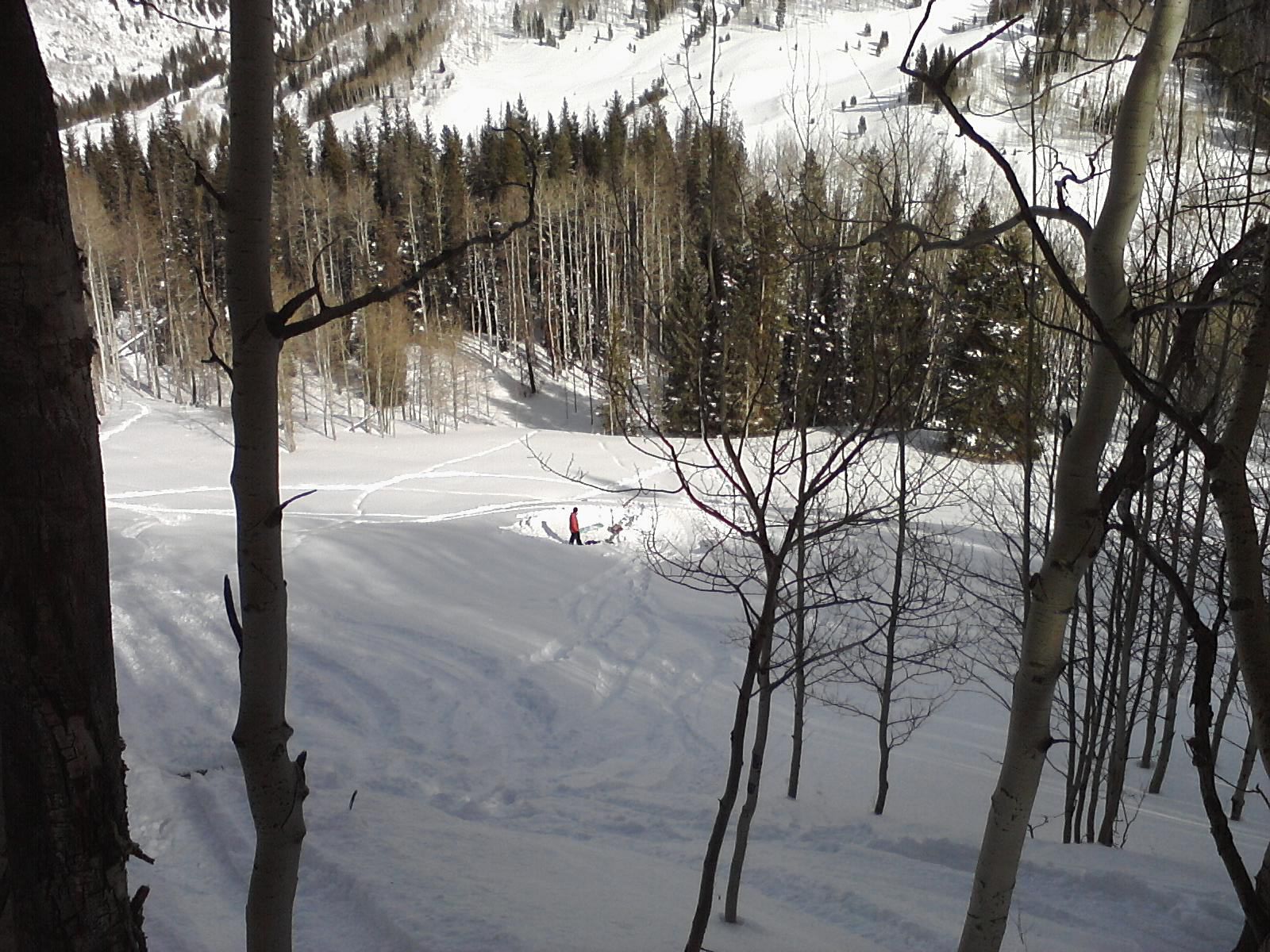
Parkasaurous Rex
Took Saturday off, as is my ritual, and it’s always nice to go back and see. The tracks tell a story. Usual tracks down the left side of Abe’s, Tweeners, Tele Line was hit and all the traverses were in. Went down the ridge and encountered the wind slab up top with a little emerging cornice. Spent some time cutting fridge size chunks with a saw/pole combination sending them onto the scarp before dropping in and down in the trees.
Snow was dense and wind affected but held and little movement. A sign of a small natural hard slab release up towards CDC, but not significant in terms of size or run. Dove into the east side trees near the flats to dig a pit.
Another 35 degree N-NE slope at 10000 feet, higher than the last area I dug in, but other wise similar. It was another storm to warm cycle, and it was balmy again (6 C). Snow surface temp was -3 C, but didn’t need to get temps because the whoomphing and propagating cracks to the top of the convex roll told the story. Again I chose a spot where above me was walled with trees and downfall close by to limit the hangfire.
As I dug the columns and readied them for testing, each of the three columns failed during the cutting process. The snow was 110 cms deep the columns failed within the 2mm facets that made up the first layer from the ground. Easy, but not a clean sheer. That’s just bad.
The stability is terrible in the trees, but Old Man’s right side/ lower midle had five tracks in it with no activity. There was signs of debris in CDC, covered by the recent storm.
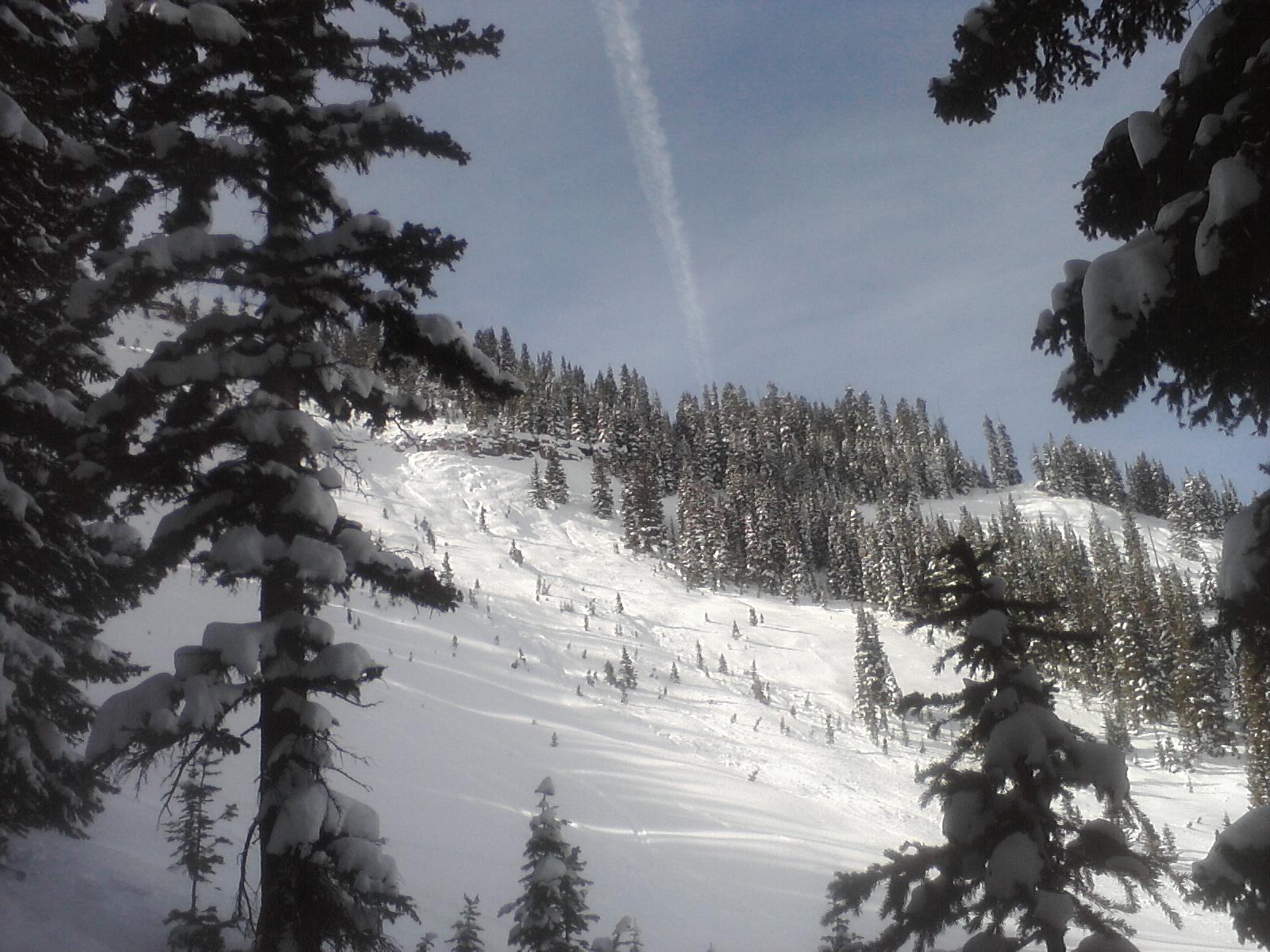
Skiing was o.k and didn’t see any movement, but the pit was pretty much as it was before.
What I saw in the pit.
Ground to 35 cms: Fist 2mm facets loose, moist.
35 cms to 85 cms: Four finger .5 mm rounds old storm snow.
85 cms to 110 cms: Fist 3 mm stellars new storm snow.
Ragged shear in the facets when cutting the columns. CTE-Q2.
1/25- 1/26/12
Headed back to my testing trees on Wednesday afternoon, a nice slow mellow skin on a perfect blue sky day. Wanted to take my time on my day off to head back to the trees and check to see if the day of warm weather had done anything to the snowpack. On Top of the World alone in the afternoon is aways a place of welcome solitude, and needed after a nutty week.
Skied my Old Man’s run not noticing any new activity from the days tracks. The middle was debris filled and covered and there were tracks slowly pushing out from the trees, emerging from the weekend cycle. The snow felt more supportive than it had been, but no guarantee of stability. Also, tracks had been put down in the left of Abraham’s, and it was obvious people were testing it. Of course Tweeners was hit, but I won’t ski Tweeners agin this year. Just my own opinion on that.
The East facing traverse to the lower trees were crusted from sunhit and uneventful. Felt like a spring day. Nice to take a break from the black flag conditions we have been experiencing. Got back to my area, and found a fresh, non fractured part of the crown to try again.
Snowpack was the same as the day before, no changes I could see except the air temp(2 C). Cut two columns and got very different results. CT-24Q2 and CT-30Q2, which was much different from the day before. Seemed like a huge change, so I cut another two and got CT-4Q2 and CT-2Q2. Not sure the issue, but those are my results, interpret as you will.
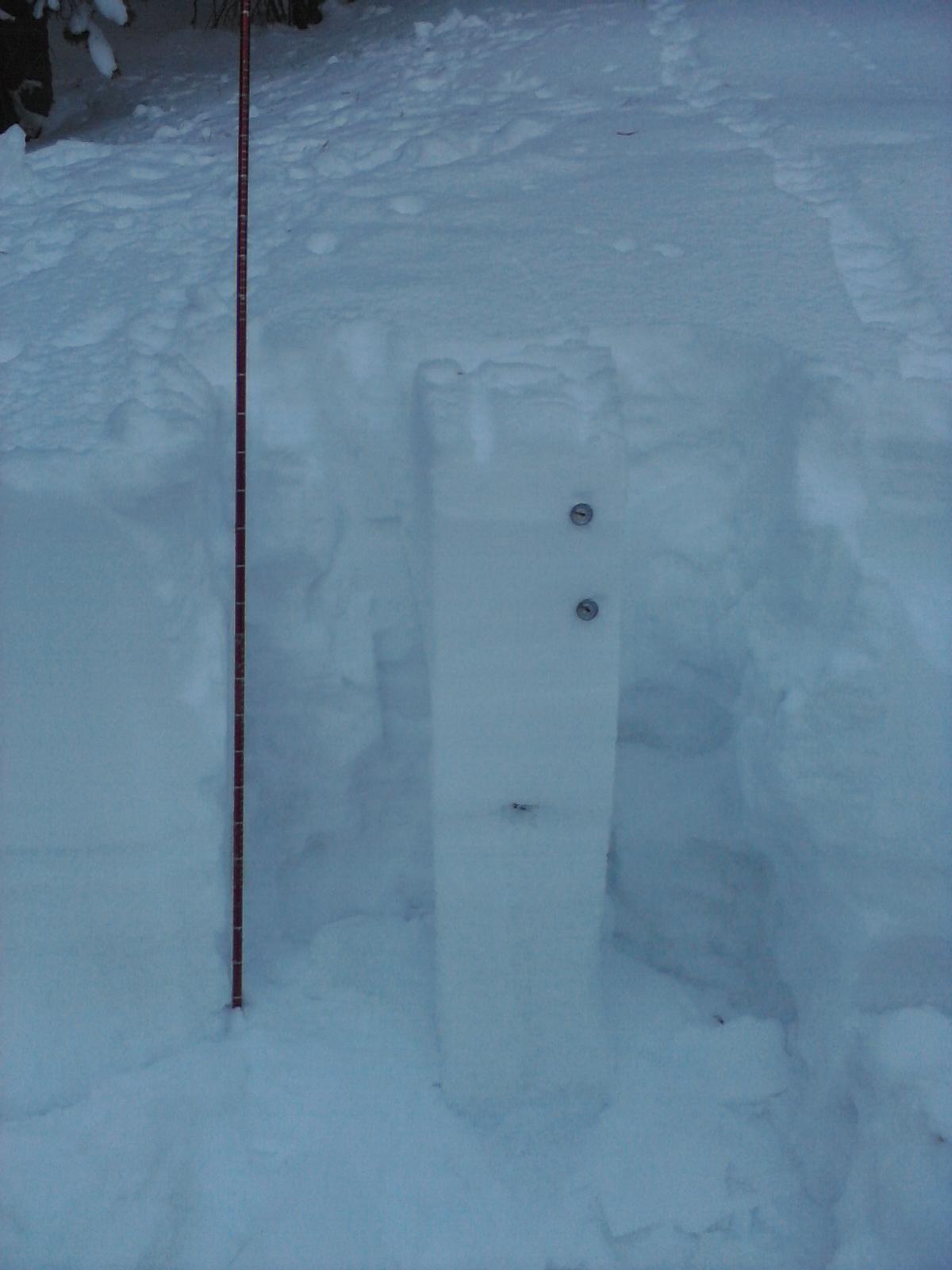
However it did seem that things were backing off a little and the day of warm temps did seem to help consolidate the lower trees a little, but didn’t cure by any means lurking instabilities. Like last time before, I was interested in the pack before the storm.
Not sure how the new snow will react until it hits, but hoping for danger not to be as elevated as last Sunday.
1/26/12
Watching the storm dump snow on my deck by the inch. 9:30 and four or so has fallen, with light winds and snow with a little moisture. Coming in to another big weekend and hoping things are going to line up for a good one. Won’t be out on Saturday, but interested in what’s going to go down. Headed out tomorrow mid day to enjoy and remember why I’m doing this. Let you all know.
Hell Yeah! Old Man’s Revisit 1/24/12
Headed up the Visti sipping a forty and listening to Def Leppard. Around Visti pole six I shot up, and by the top I was feeling loose. By the time I reached the Top of the World, I was cross-eyed and tingling. Continued down to Old Man’s where I stripped off all my clothes and straight lined the middle, still listening to Def Leppard and screaming “Ski to Die” with a Born to Lose tattoo on my bare chest, just like I did last week. Passed out in the trees at the bottom. Woke up an hour later, and started my traverse out.
It must have come to me in a dream, that everywhere in EV was filled with evidence of the large cycle that happened this Sunday. Crowns and debris were everywhere in areas over thirty degrees, N-NE facing in the trees. Found a good spot on a NE convex roll over around 9500 feet in a 150 foot wide clearing that had fractured during the cycle. A good spot to test in as the hangfire was minimal above, about fifteen feet to the line of trees and bed surface under my feet.
I wanted to check out the snowpack, and then do a couple tests and see if my results were in line with the obvious instability. Also I wanted to see if stability was any better a couple days after the event. I found the spot. It was N-NE facing, the roll over pitching to 36 degrees at the top of the crown. I choose to do a full pit profile, then compression tests and lastly an AK block, a test created in Alaska by Bill Glude.
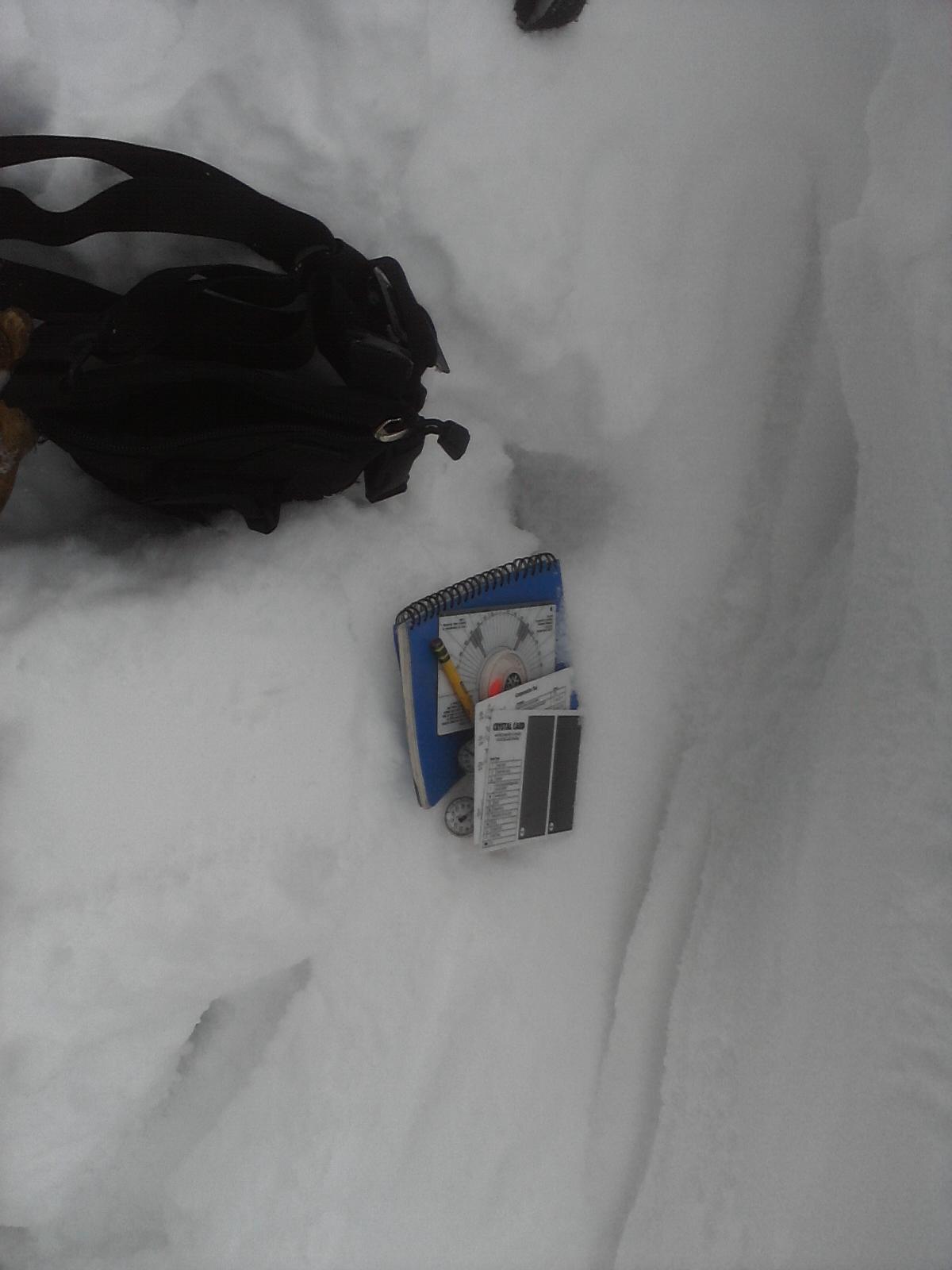
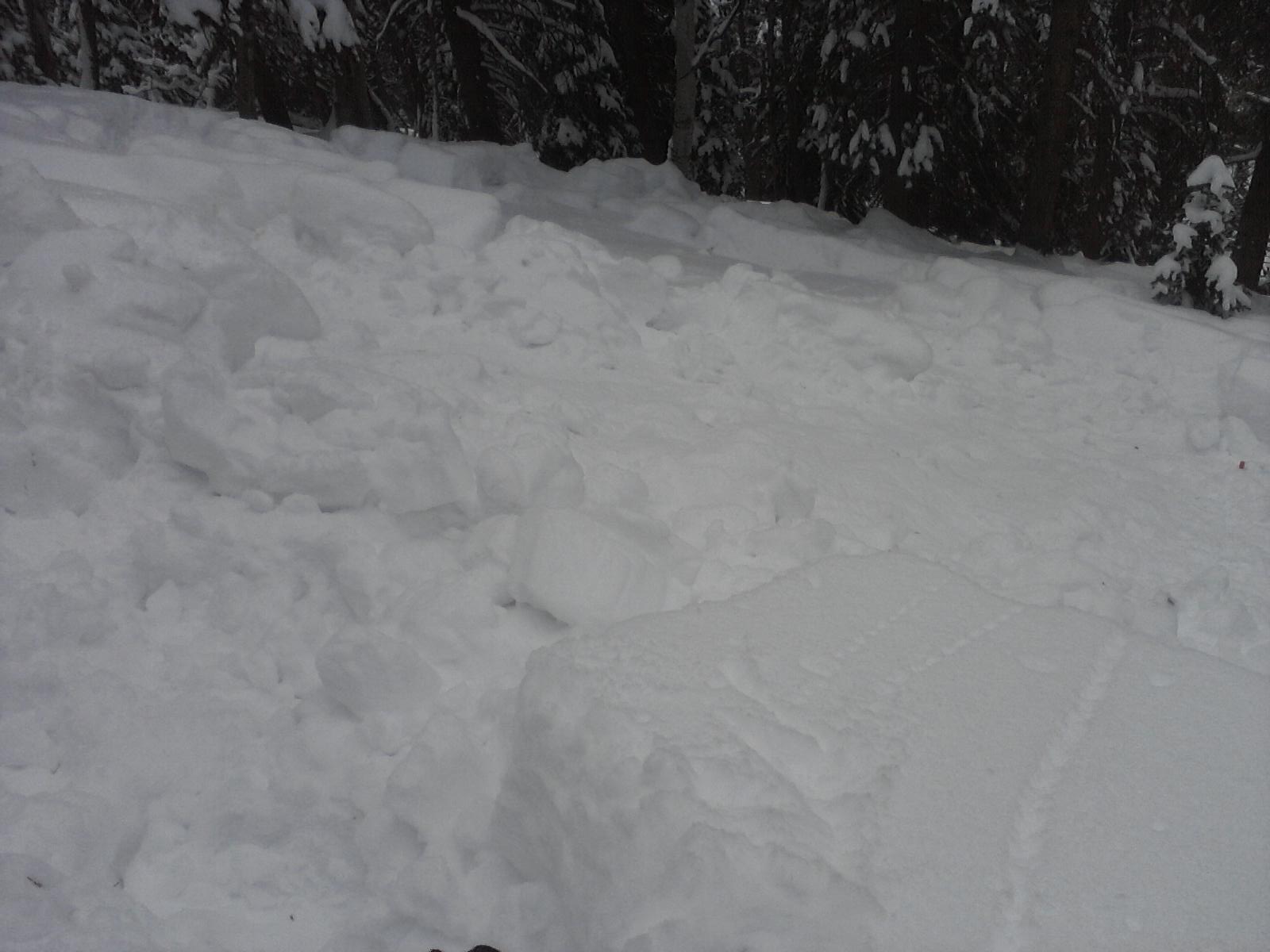 You need a graduated probe, two dial snow thermometers(digital suck) a snow saw, inclonometer, a field book and a pencil. Keeping your pack and gloves on, lay your pole on the snow and use your shovel to make a nice clean wall down 160 cms the length of the pole in AK here to the ground. Why 160? Hard to trigger a weak layer over six feet, a full column would take too long in AK in the field. Put your probe in the side of the pit to use as a measuring stick.
Dig your pit and smooth the face of the area as wide as your pole. Enough room to not only look at the snow but then be able to cut columns for your test. Profile the snow on the graph in your book, noting hardness, depth of different layers, different crystal types and sizes. Also note temperature gradients every 10 cms(temperature gradients indicate poor adherence from one layer in the snow pack to the other. By using two thermometers at once you can expedite the process. You also note time, aspect, elevation, sky cover, snow and snow surface temp Looking for obvious weak layers, crusts and density changes. Use your hand brush whatever to feel the layers out and expose them. Mark three shovel indentations gently on top of the snow and cut each shovel mark with your saw and excava the sides of the block with your shovel to give yourself room to cut the back of the block with your saw to isolate the cloumns.
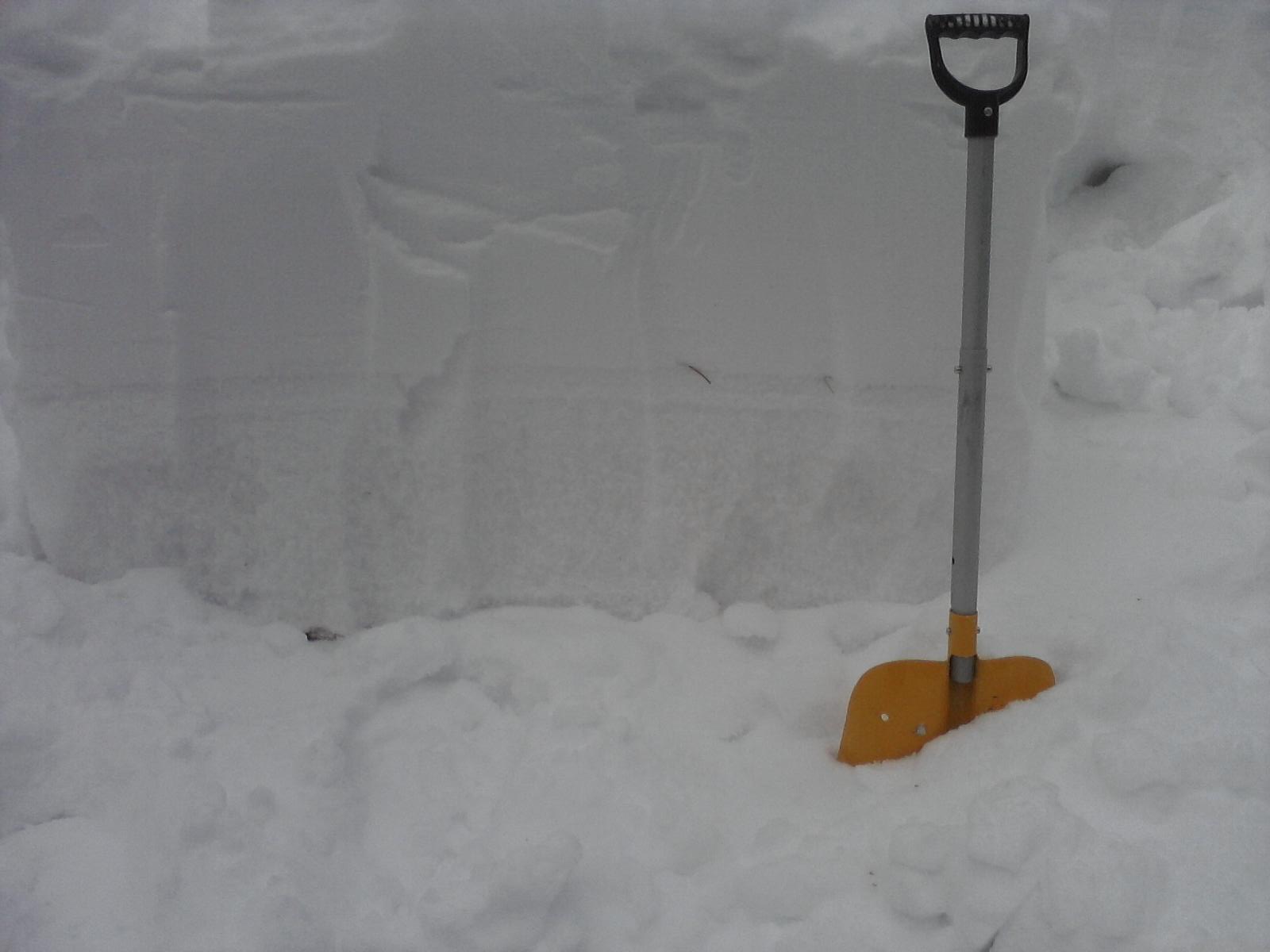
not quite ready to cut into columns gotta clean it up
Cut the back of the block from both sides with your saw and eliminate the column in the middle. Now you have two isolated columns. Lay your shovel genlty on top of each column and do your CT(compression tests wrist, elbow and shoulder.) tests and check your results.
I dug to 110 cms and hit ground. I got CT-2(compression test with column failure on two wrist taps)on both columns with a Q1(very clean, easy) and Q2 sheer(moderately easy, not as clean) respectively at 60 cms on the old settled storm snow(.5 mm degraded stellars) interface on the 2mm loose facet layer. That means very not good. If you were guiding, you’d get the hell out of there.
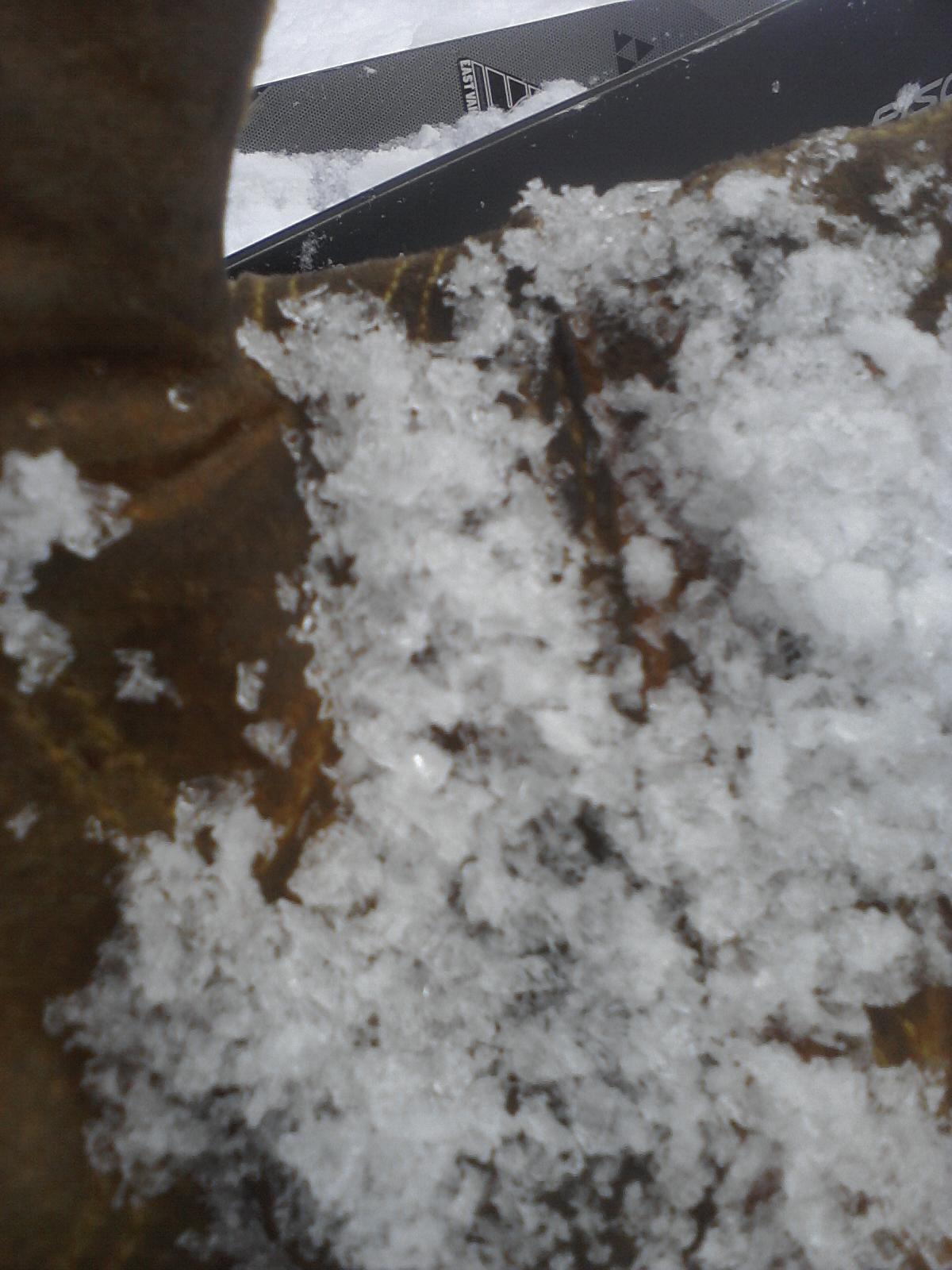
facets of doom
Looking down the crown, I saw this was the layer weak layer on which the slab ran, probably triggered by a traversing skier or maybe naturally during Sundays’ cycle. So far so good. My transient test results confirmed the still awful stability in the trees.
Next was an AK block, a Reuchblock without the back cut, basically to make it more representative of a natural slope. Lay your skis out and dig the block face to your desired depth, 160 cms again is good or to an obvious weak layer you want to test. Isolate the sides of the block to a pole length with your shovel/saw.
The idea is to get your skis on, and get on the block. First flex your knees, then a deep flex then a series of jumps until you get the block to fail. Then you determine the stability by that number. Indicator of very bad stability.
Cut my block, took my skis than took one boot step uphill next to the block and the convex roll fractured 4 feet above the last crown 75 feet wide and moved about a foot. Exactly why you keep your Float pack on during a test. It did surprise me and I ended up hugging a chair sized block but again the slide had happened here couple days ago and I was standing on bed surface. I can only imagine what is was like on Sunday in these trees. The block itself triggered remotely with a Q1(easy clean) shear as well.
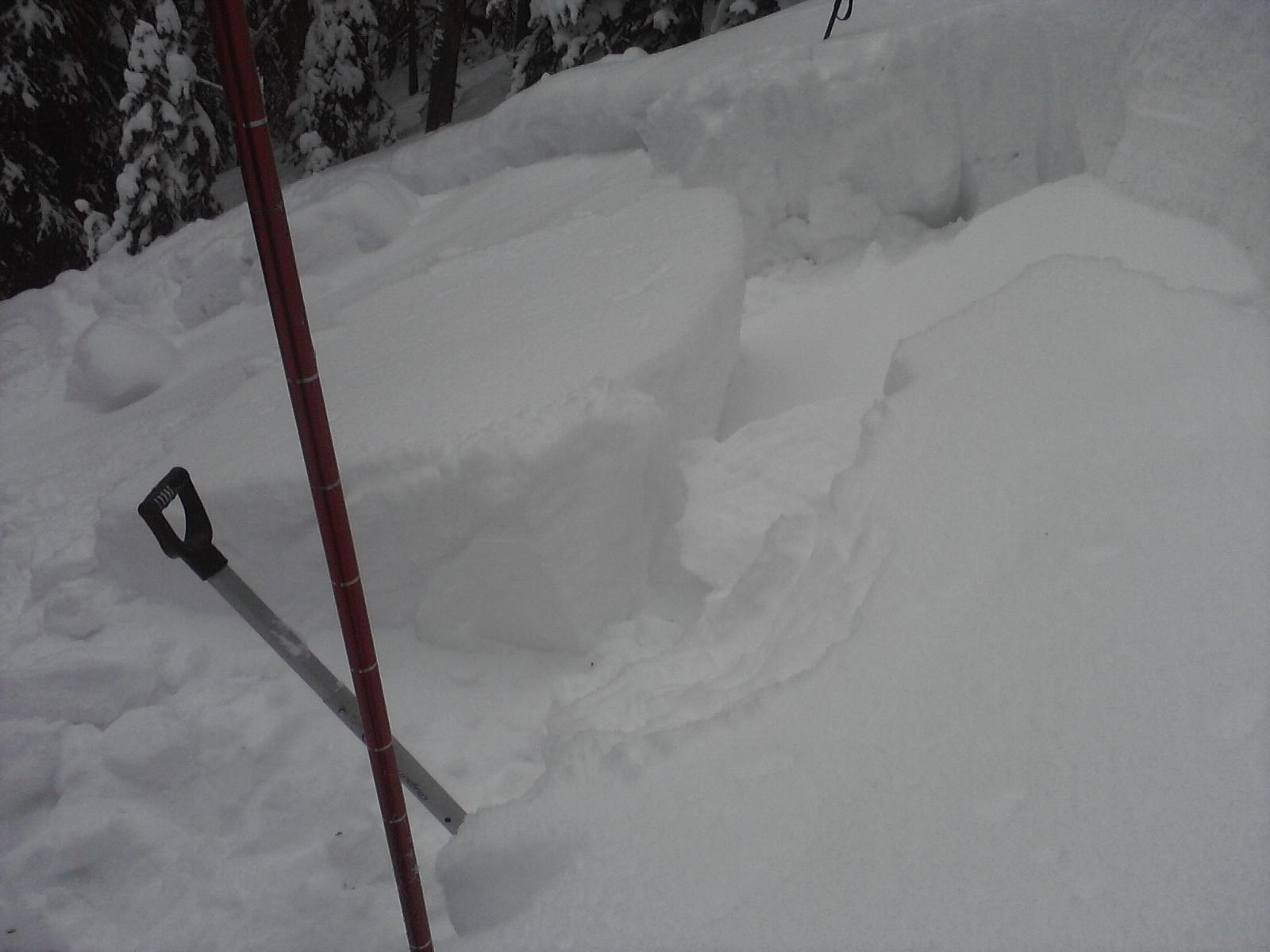
If you were doing any of these tests on a uncontrolled slope, you would have a spotters and/or anchors. Make you own decisions and do your own tests on your own ability level, using your own judgement. This goes for your skiing as well. I skied down linking snow-covered debris piles to stay out of trouble.
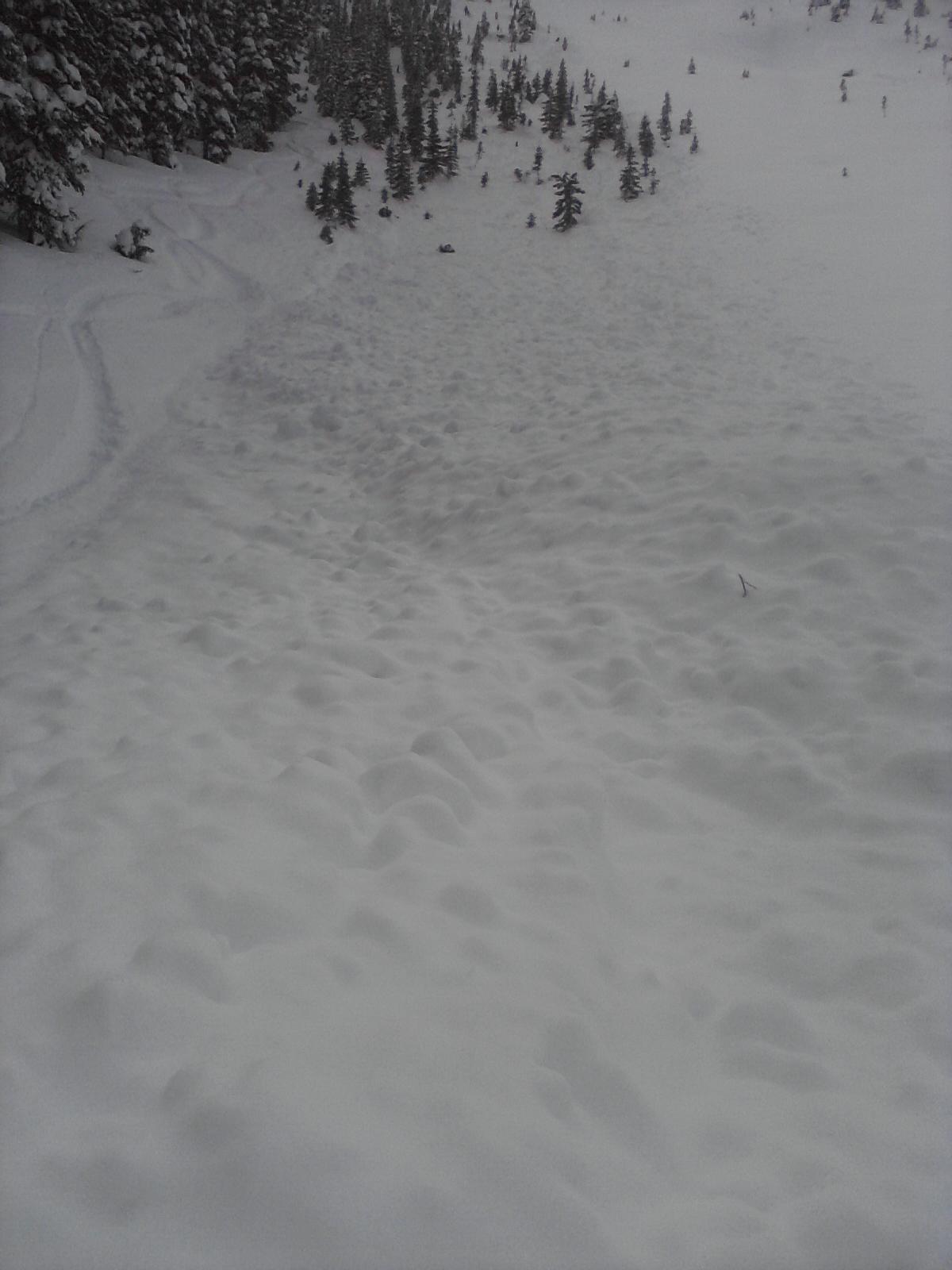 Bottom line: still crappy stability, but most main areas have run, although lurking pockets of instability im sure are there especially in the trees. Able to ski covered bed surface in all steep areas to avoid possible triggers. Although not like a few days ago, still very suspect in unskied debris free N-NE areas all elevations but especially down lower. East facing had crusted up due to the sunhit.
Snowpack: No significant temperature gradients in the pack
Here’s what I saw in my pit.
Ground to Twenty cms: Four finger 3mm moist loose facets.
Twenty to Sixty cms: Fist 2mm loose facets
Sixty to One hundred cms: Four finger settled old storm snow .5 mm degraded stellars
One hundred cms to one ten cms: Fist light new snow 2-3 mm stellars
At Sixty cms: The interface between the denser old storm snow and the loose facets was the spot where things have been triggering down lower in the trees.
Friends…

 East Vail Institute