
Hell Yeah! Old Man’s Revisit 1/24/12
Headed up the Visti sipping a forty and listening to Def Leppard. Around Visti pole six I shot up, and by the top I was feeling loose. By the time I reached the Top of the World, I was cross-eyed and tingling. Continued down to Old Man’s where I stripped off all my clothes and straight lined the middle, still listening to Def Leppard and screaming “Ski to Die” with a Born to Lose tattoo on my bare chest, just like I did last week. Passed out in the trees at the bottom. Woke up an hour later, and started my traverse out.
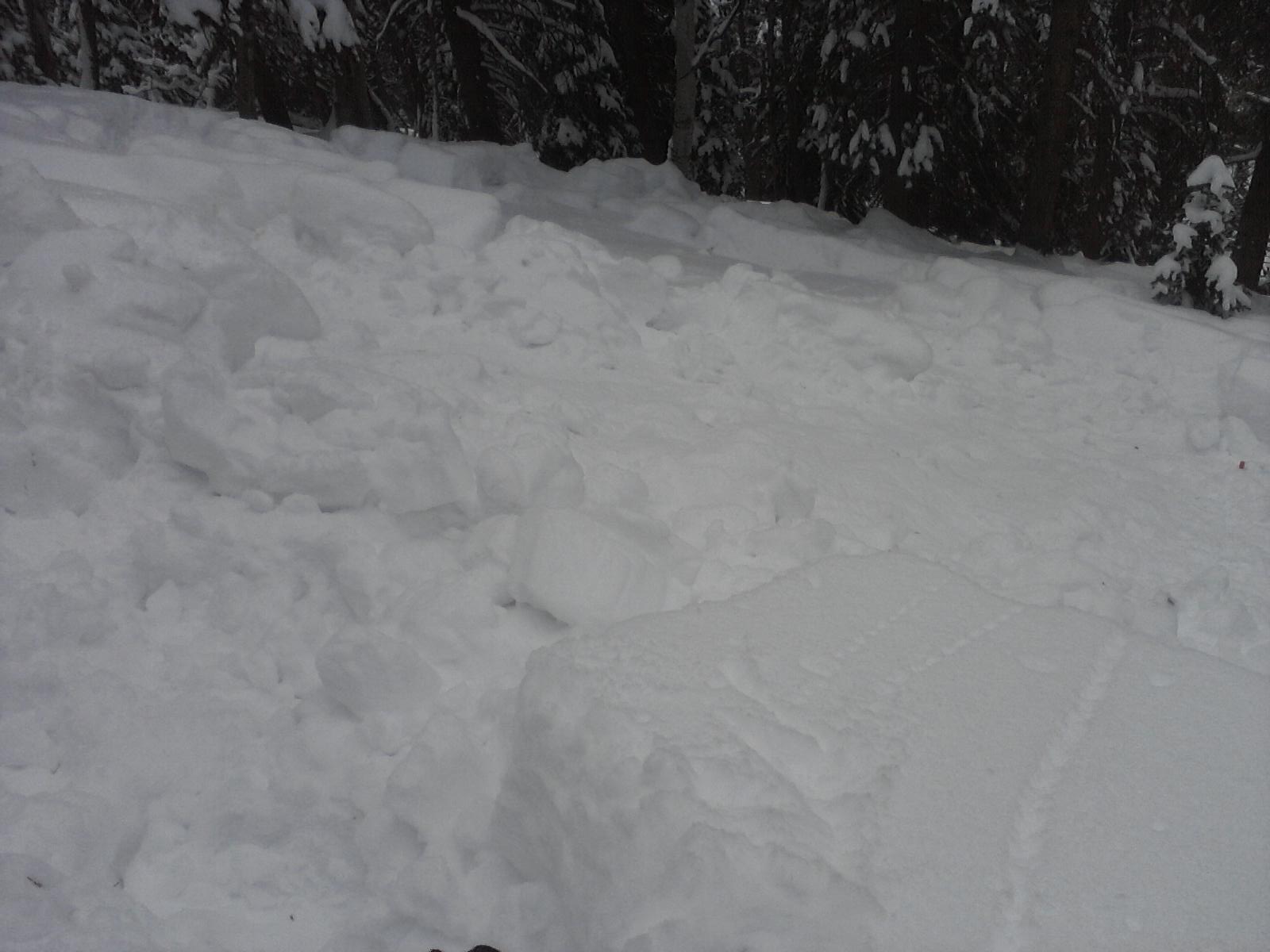
It must have come to me in a dream, that everywhere in EV was filled with evidence of the large cycle that happened this Sunday. Crowns and debris were everywhere in areas over thirty degrees, N-NE facing in the trees. Found a good spot on a NE convex roll over around 9500 feet in a 150 foot wide clearing that had fractured during the cycle. A good spot to test in as the hangfire was minimal above, about fifteen feet to the line of trees and bed surface under my feet.
I wanted to check out the snowpack, and then do a couple tests and see if my results were in line with the obvious instability. Also I wanted to see if stability was any better a couple days after the event. I found the spot. It was N-NE facing, the roll over pitching to 36 degrees at the top of the crown. I choose to do a full pit profile, then compression tests and lastly an AK block, a test created in Alaska by Bill Glude.
 You need a graduated probe, two dial snow thermometers(digital suck) a snow saw, inclonometer, a field book and a pencil. Keeping your pack and gloves on, lay your pole on the snow and use your shovel to make a nice clean wall down 160 cms the length of the pole in AK here to the ground. Why 160? Hard to trigger a weak layer over six feet, a full column would take too long in AK in the field. Put your probe in the side of the pit to use as a measuring stick.
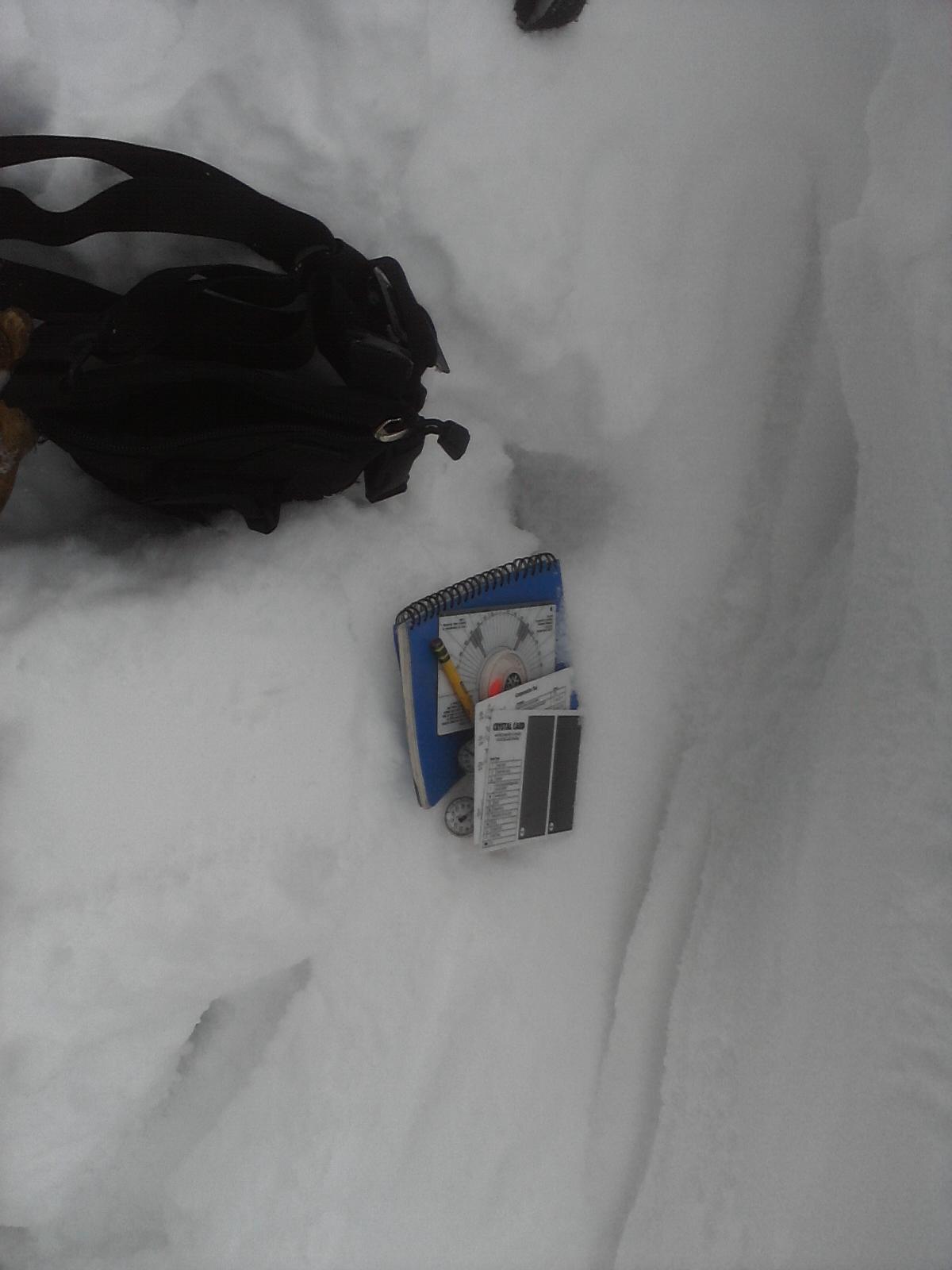
Dig your pit and smooth the face of the area as wide as your pole. Enough room to not only look at the snow but then be able to cut columns for your test. Profile the snow on the graph in your book, noting hardness, depth of different layers, different crystal types and sizes. Also note temperature gradients every 10 cms(temperature gradients indicate poor adherence from one layer in the snow pack to the other. By using two thermometers at once you can expedite the process. You also note time, aspect, elevation, sky cover, snow and snow surface temp Looking for obvious weak layers, crusts and density changes. Use your hand brush whatever to feel the layers out and expose them. Mark three shovel indentations gently on top of the snow and cut each shovel mark with your saw and excava the sides of the block with your shovel to give yourself room to cut the back of the block with your saw to isolate the cloumns.
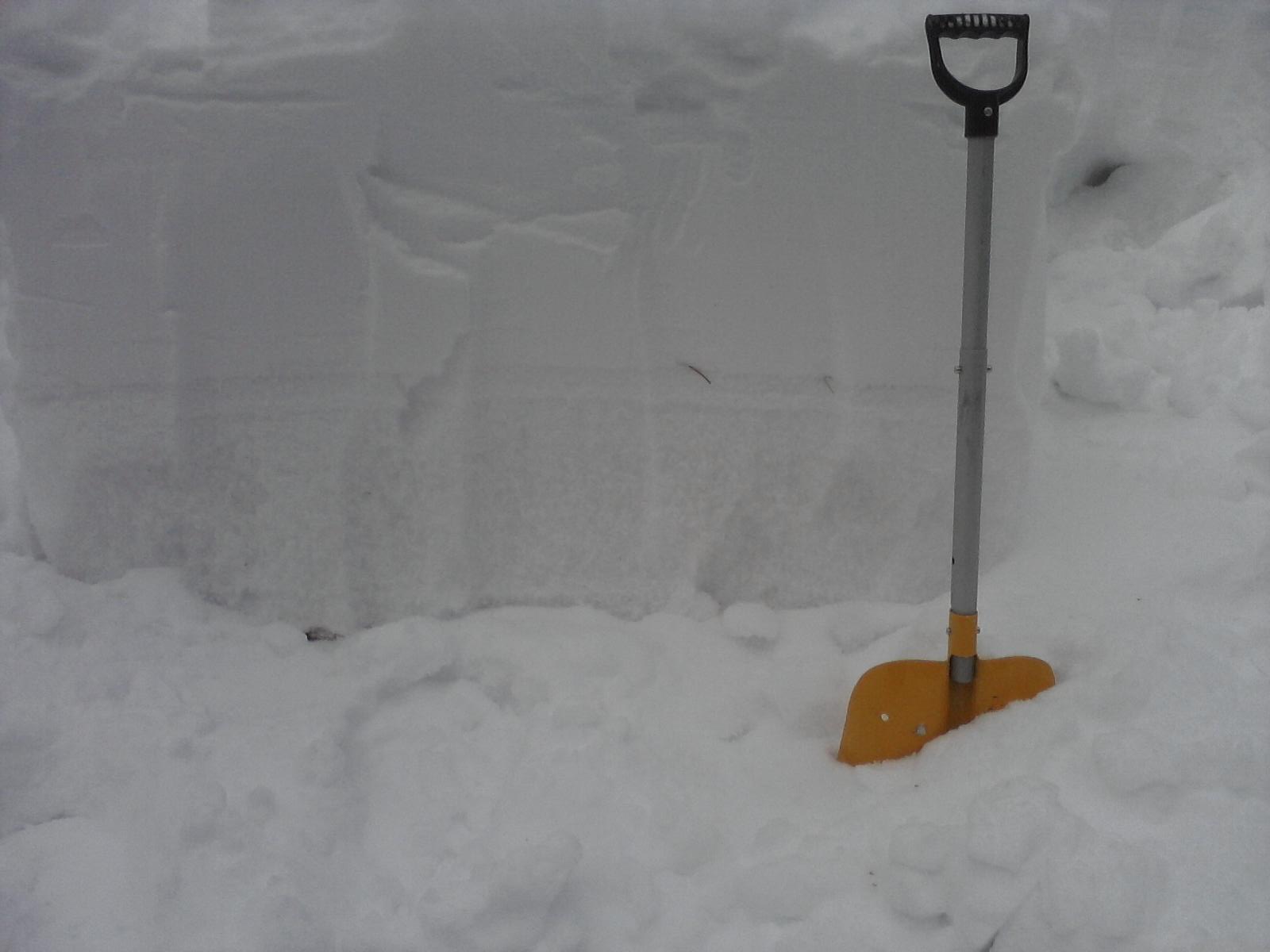
not quite ready to cut into columns gotta clean it up
Cut the back of the block from both sides with your saw and eliminate the column in the middle. Now you have two isolated columns. Lay your shovel genlty on top of each column and do your CT(compression tests wrist, elbow and shoulder.) tests and check your results.
I dug to 110 cms and hit ground. I got CT-2(compression test with column failure on two wrist taps)on both columns with a Q1(very clean, easy) and Q2 sheer(moderately easy, not as clean) respectively at 60 cms on the old settled storm snow(.5 mm degraded stellars) interface on the 2mm loose facet layer. That means very not good. If you were guiding, you’d get the hell out of there.
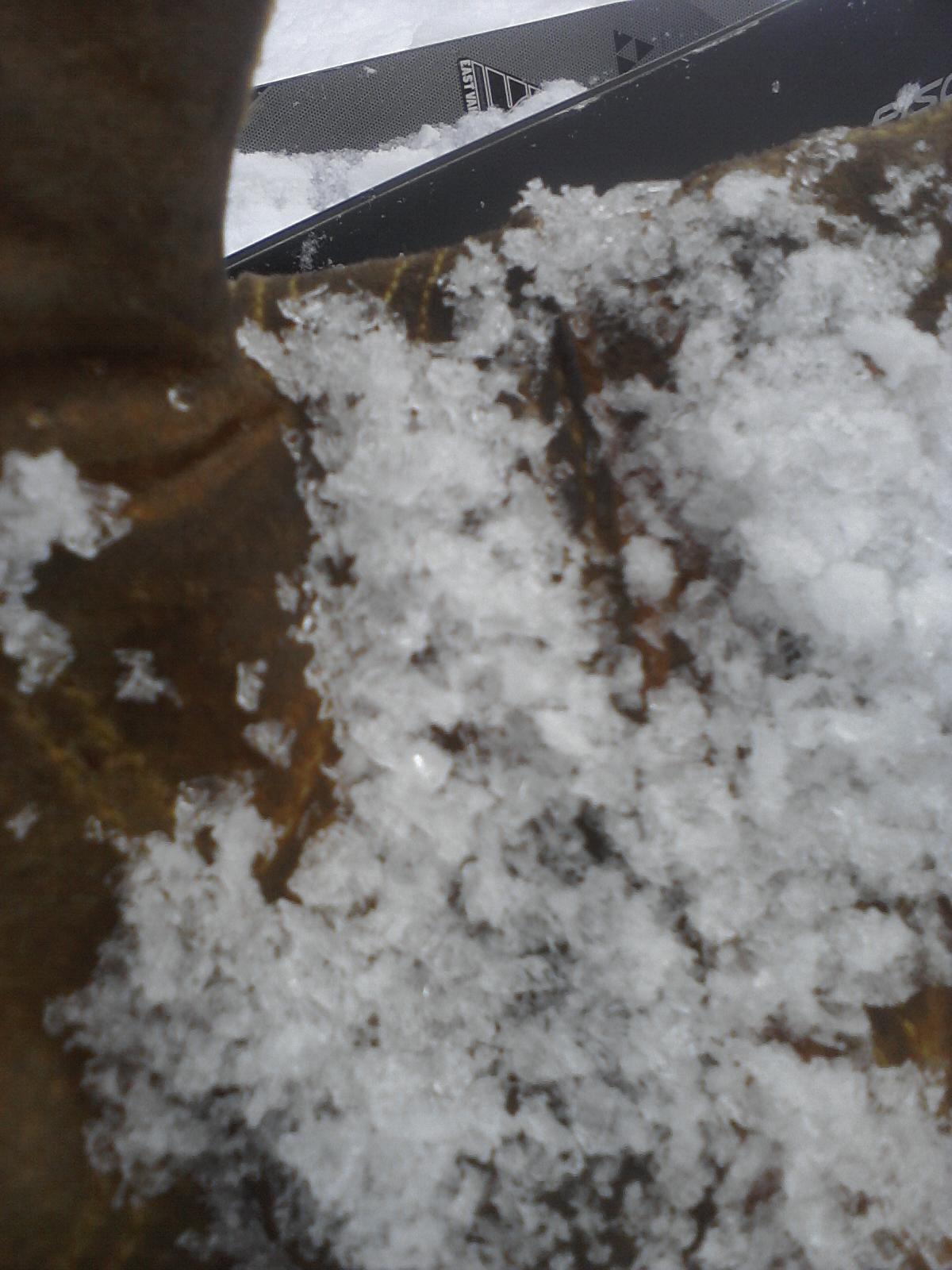
facets of doom
Looking down the crown, I saw this was the layer weak layer on which the slab ran, probably triggered by a traversing skier or maybe naturally during Sundays’ cycle. So far so good. My transient test results confirmed the still awful stability in the trees.
Next was an AK block, a Reuchblock without the back cut, basically to make it more representative of a natural slope. Lay your skis out and dig the block face to your desired depth, 160 cms again is good or to an obvious weak layer you want to test. Isolate the sides of the block to a pole length with your shovel/saw.
The idea is to get your skis on, and get on the block. First flex your knees, then a deep flex then a series of jumps until you get the block to fail. Then you determine the stability by that number. Indicator of very bad stability.
Cut my block, took my skis than took one boot step uphill next to the block and the convex roll fractured 4 feet above the last crown 75 feet wide and moved about a foot. Exactly why you keep your Float pack on during a test. It did surprise me and I ended up hugging a chair sized block but again the slide had happened here couple days ago and I was standing on bed surface. I can only imagine what is was like on Sunday in these trees. The block itself triggered remotely with a Q1(easy clean) shear as well.
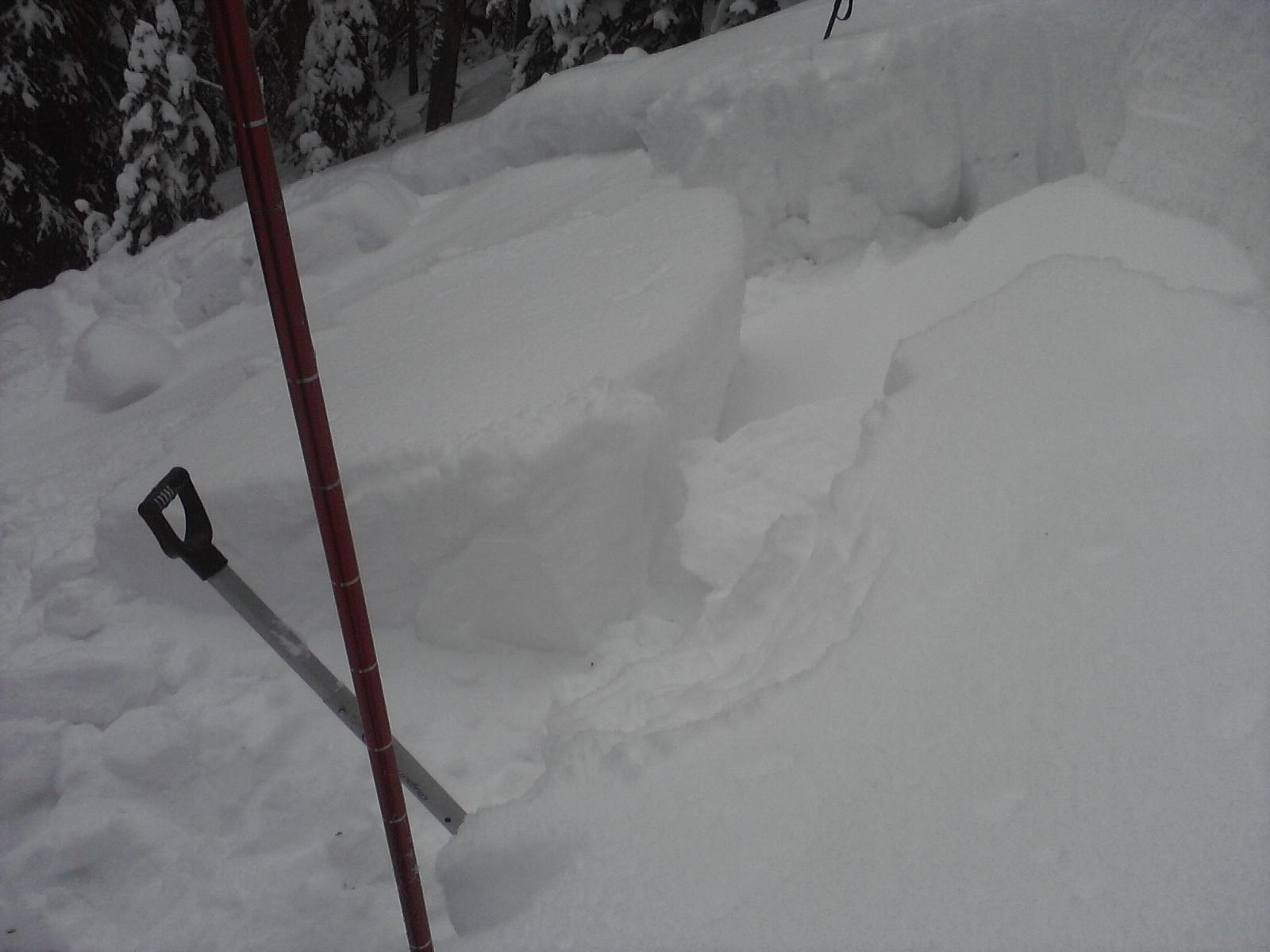
If you were doing any of these tests on a uncontrolled slope, you would have a spotters and/or anchors. Make you own decisions and do your own tests on your own ability level, using your own judgement. This goes for your skiing as well. I skied down linking snow-covered debris piles to stay out of trouble.
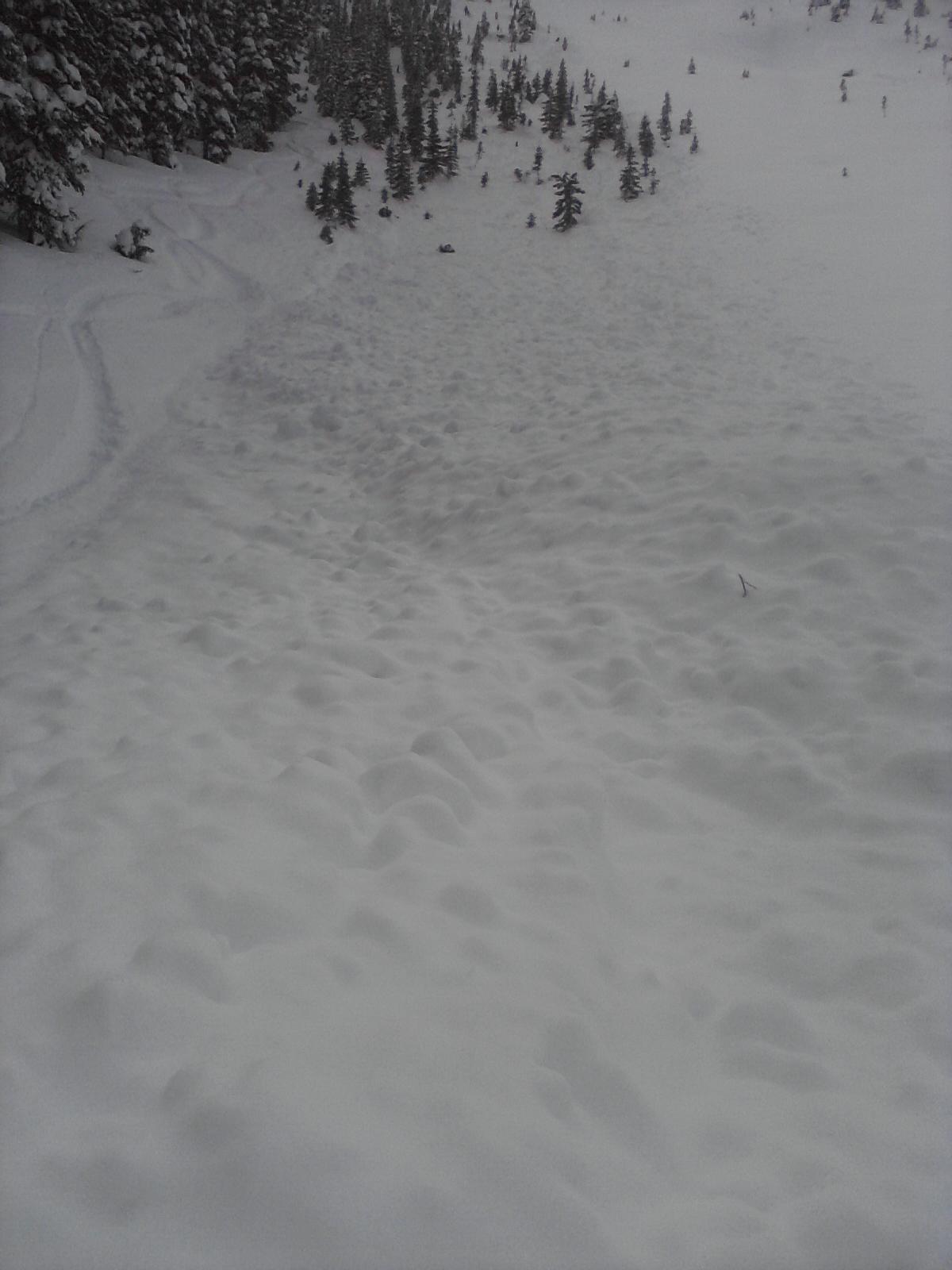 Bottom line: still crappy stability, but most main areas have run, although lurking pockets of instability im sure are there especially in the trees. Able to ski covered bed surface in all steep areas to avoid possible triggers. Although not like a few days ago, still very suspect in unskied debris free N-NE areas all elevations but especially down lower. East facing had crusted up due to the sunhit.
Snowpack: No significant temperature gradients in the pack
Here’s what I saw in my pit.
Ground to Twenty cms: Four finger 3mm moist loose facets.
Twenty to Sixty cms: Fist 2mm loose facets
Sixty to One hundred cms: Four finger settled old storm snow .5 mm degraded stellars
One hundred cms to one ten cms: Fist light new snow 2-3 mm stellars
At Sixty cms: The interface between the denser old storm snow and the loose facets was the spot where things have been triggering down lower in the trees.
Recent Activity 1/23/12
Went up with no expectations today. Caution was on high. Saw the activity under blue-sky’s famous cornice and took notice.
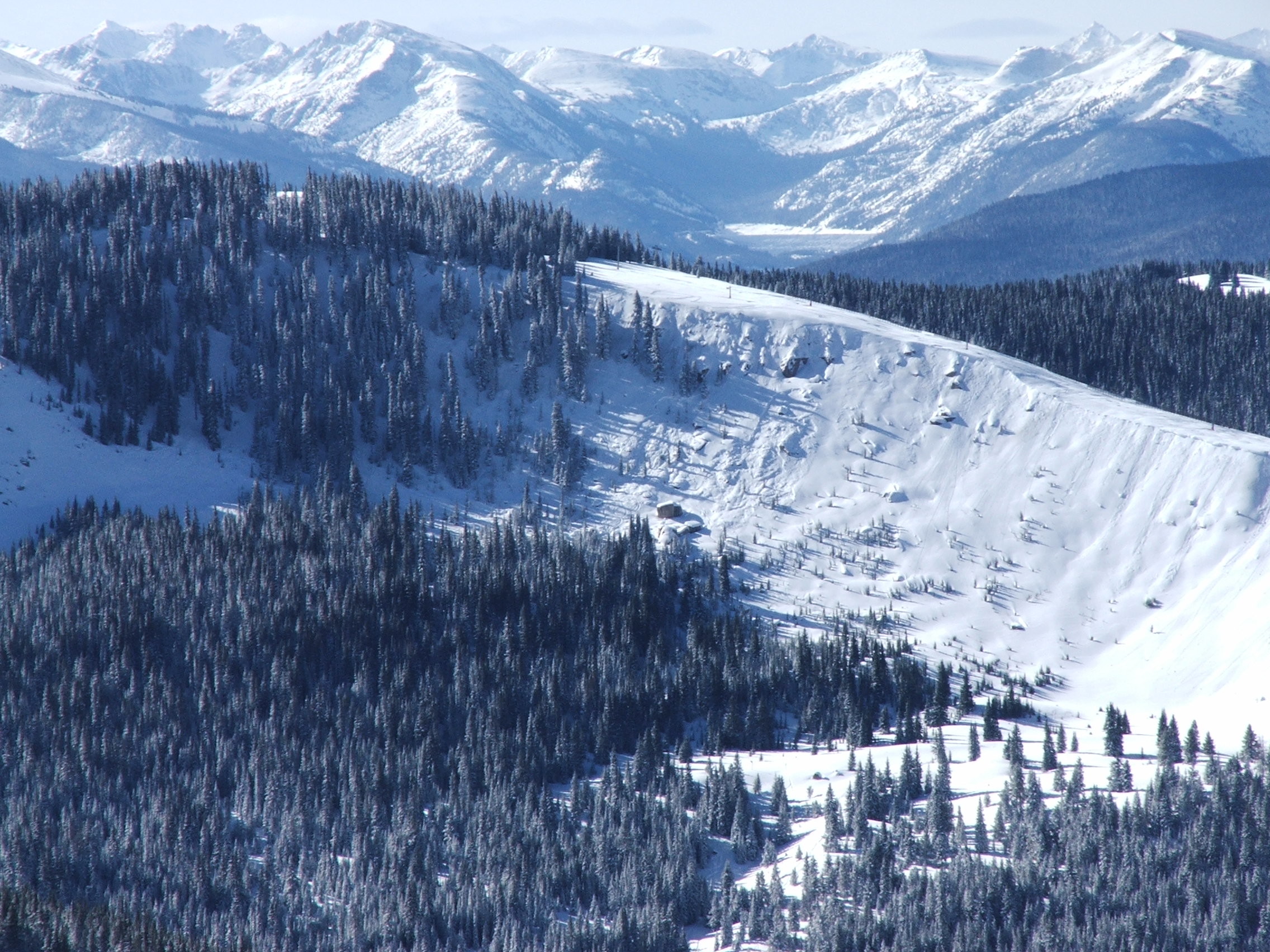
We encountered a couple other riders on the skin up, as well as at the top of Benchie. We all talked about our observations and our plan of action. They had mentioned having observed avi activity next to Tele-Line. The activity was visible from the top in a couple different areas. Let them go ahead and waited for a long time for them to make their descent. They did not set off any new activity.
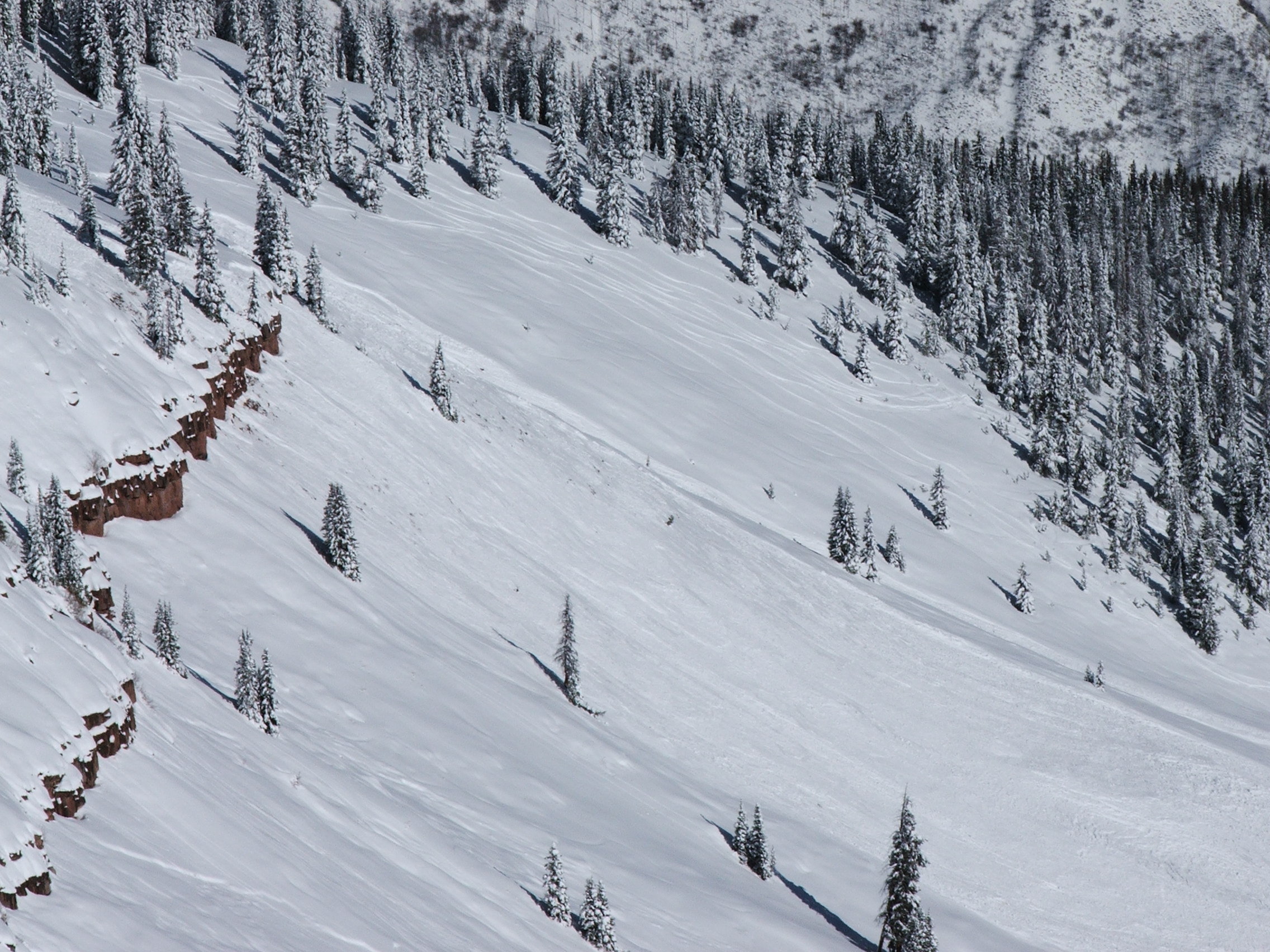
The initiation was on the downhill side of the cliffs, potential release area for both natural and human triggered slides. Ranged from 0.2m-0.6m. deep and ran a ways downslope.
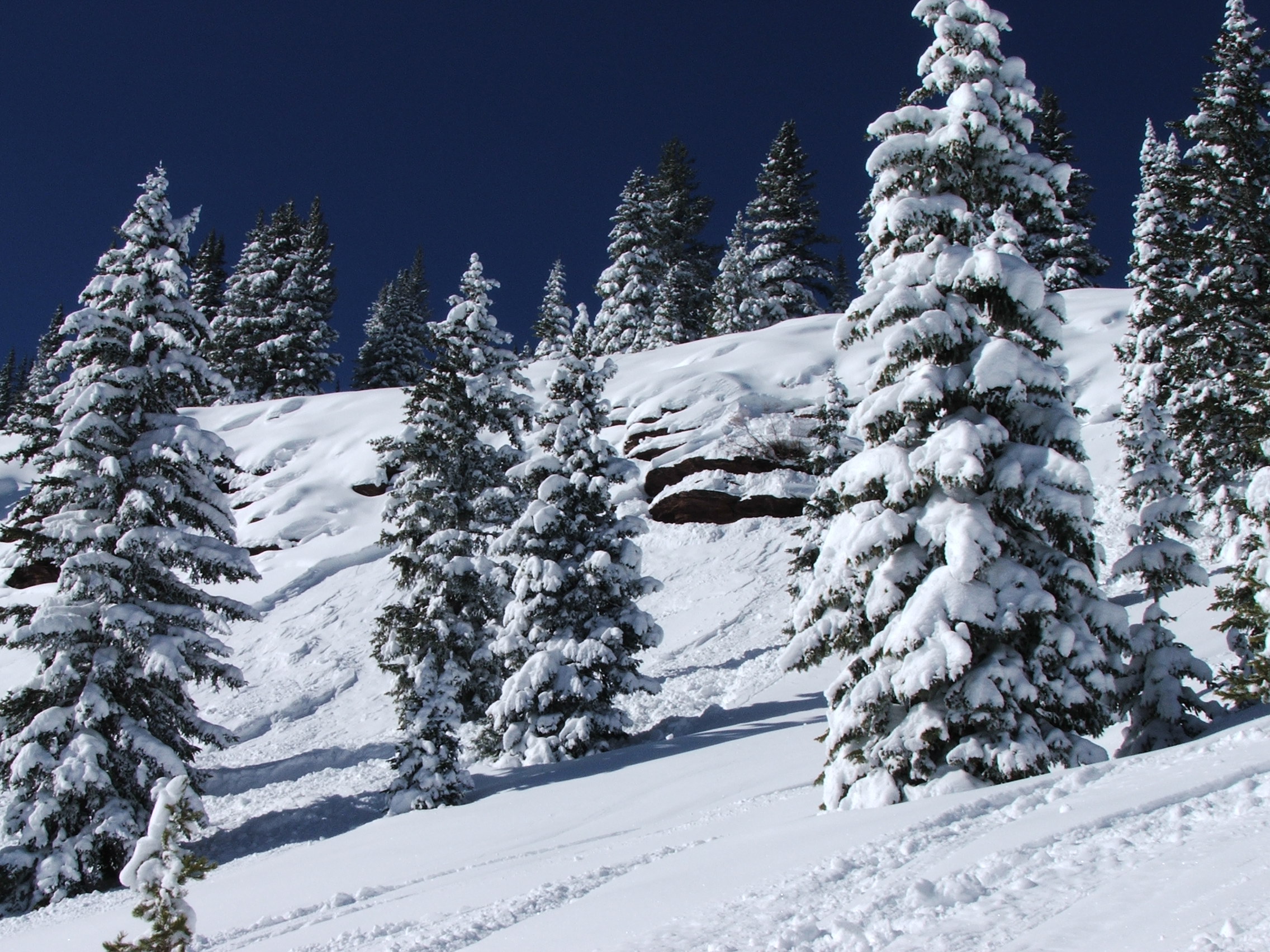
Evidence of two slides can be seen here, one during the last storm the other since yesterday. Also noted, were shooting cracks and obvious instability in the open glades. Further down to our riders right was a much more significant avi event that ran much farther.
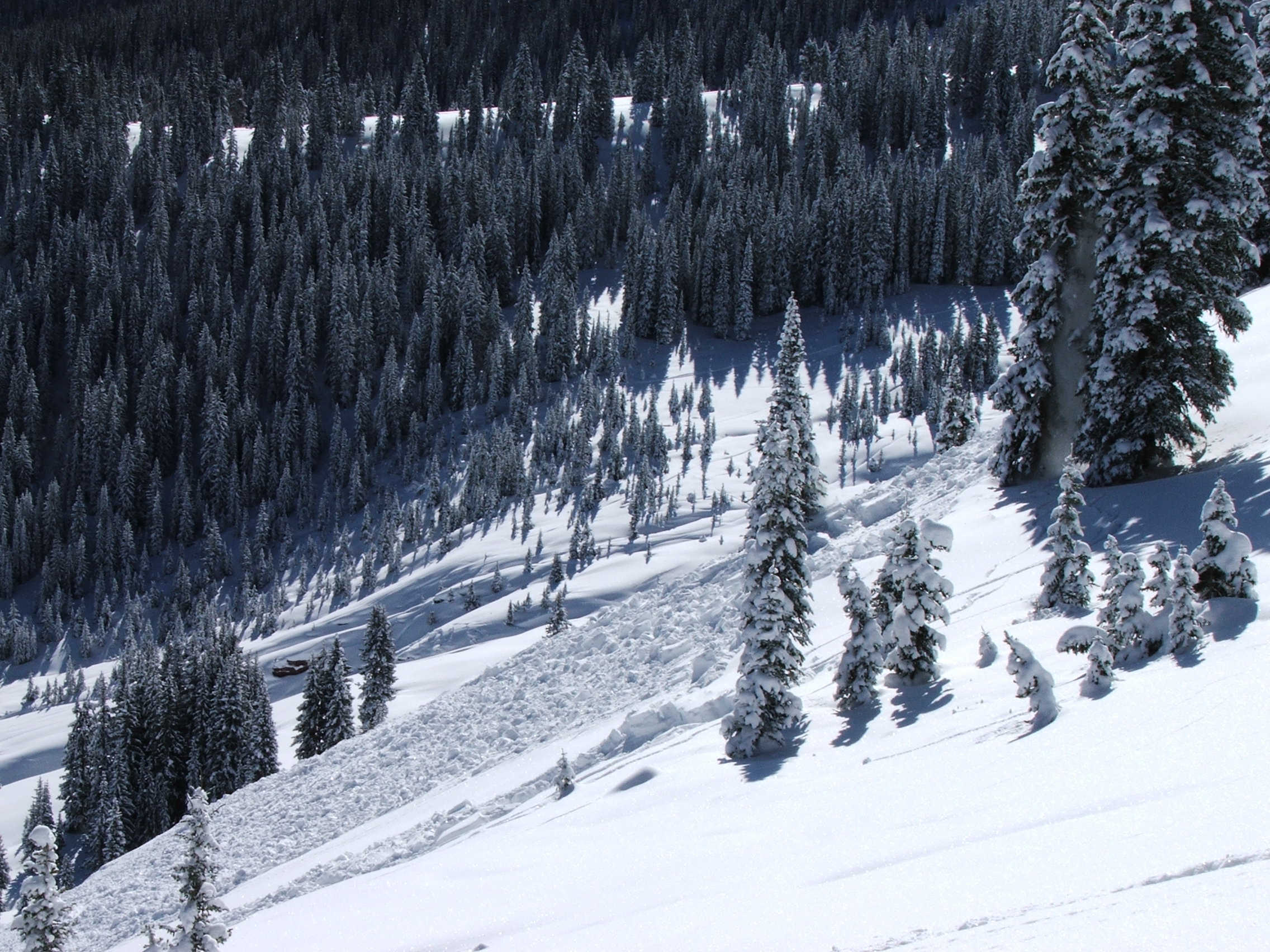
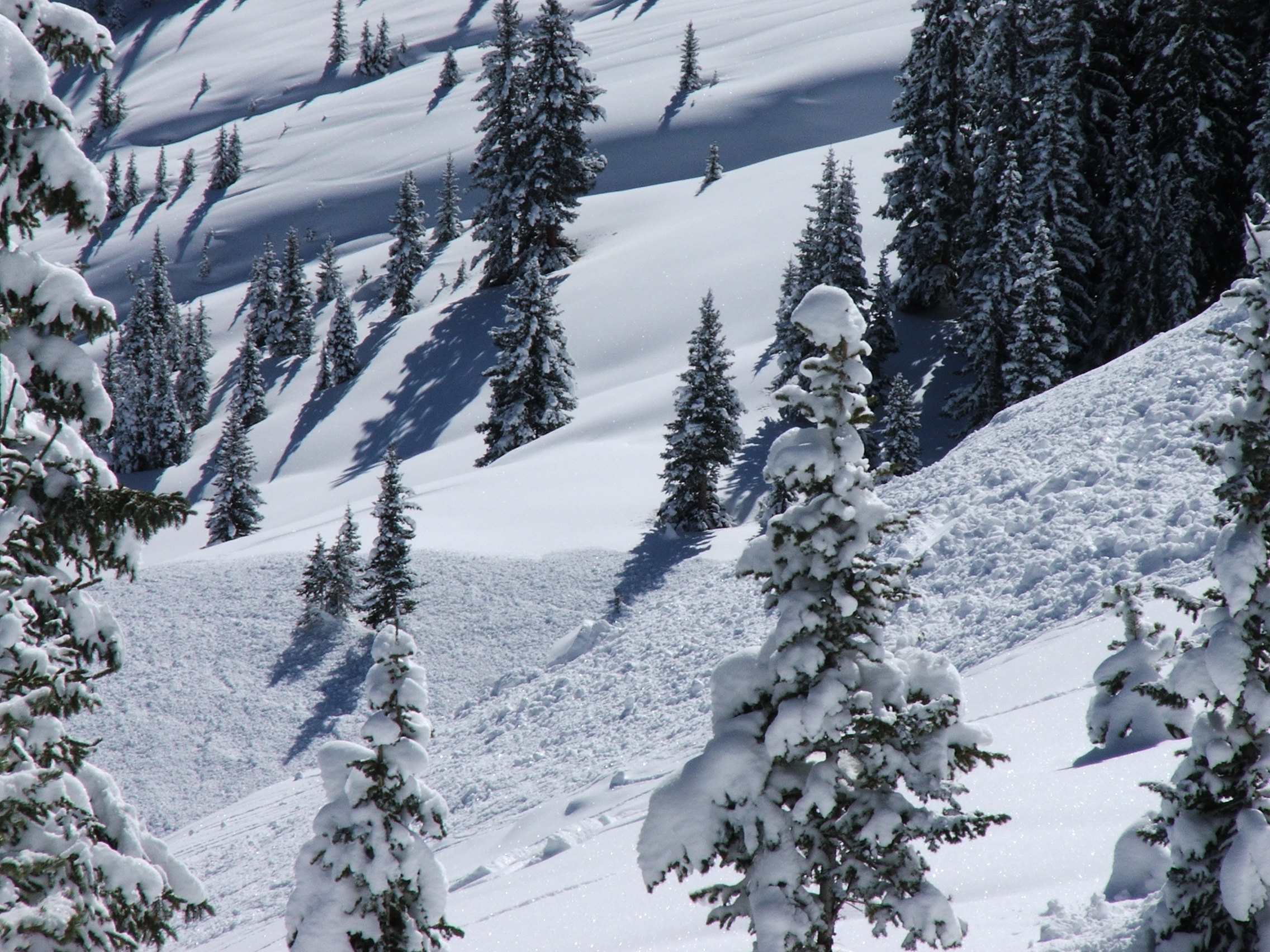
Depth of some of the crown surface was an esimated 0.4m-0.6m.
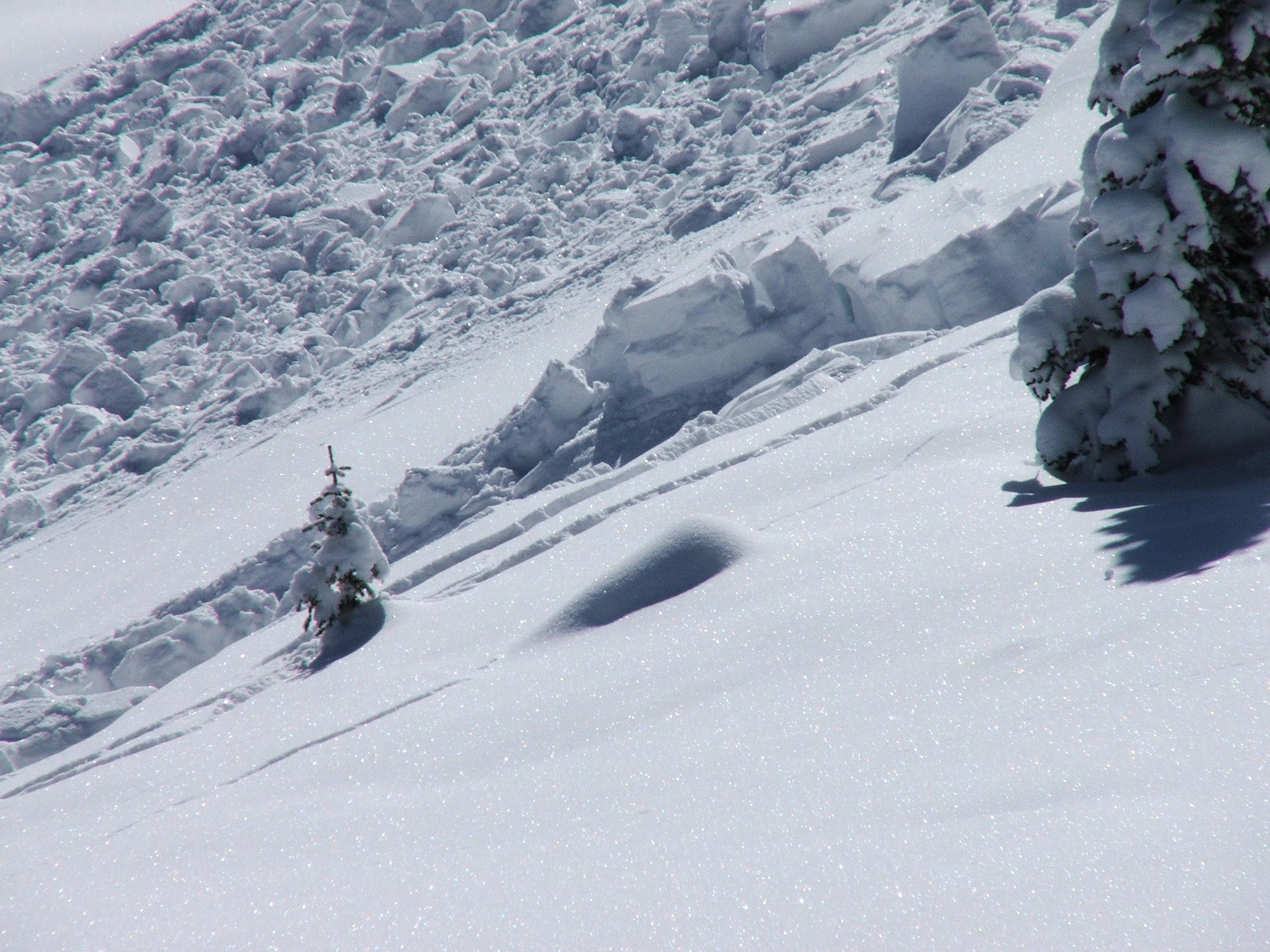
Did not approach slides due to the presence of hangfire and obvious signs of instability. Stuck to lower angle pitches and skied amongst tall pines that were possible anchors for the weak snowpack. Below treeline, more cracking below the traverse through the aspens was observed.
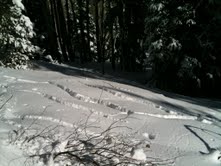
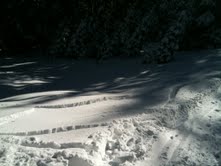
Signals were everywhere and careful route planning and good decsion making are a must. Stay safe!
Friday / Saturday Observation
The trip to EV on Friday was an interesting one. Without a doubt best pow turns of my season, however it was also the most high stake avi danger day as well. Had multiple signs of weak snow pack, wind, numerous whoomfs, cracks, and even triggered a few small slides on both open faces and trees north-through-east. The aspect skiers right of our line had slid rather large and rather disturbingly as it is a line I have skied weekly in past seasons. Martineast recapped the day well here and I only regret not having a camera to take some shots.
In an effort to feed the need Saturday, I went out all geared up for another EV lap, keeping in mind I would most likely be turning back and skiing in-bounds with a fully loaded pack. After some quality lift chair time I reached the top of Sourdough and decided I’d keep my self busy with some beacon training and to check the snow to see if the drop in temperature had improved the snow pack.
After beacon basin, I searched to find areas which represented the terrain I had been skiing yesterday and just as I had expected, the snow was still rotten — super rotten. Below are pics from a “hasty pit” I dug in a north-east facing tree’d area similar to the terrain and aspect where I had encountered the most activity two days prior.
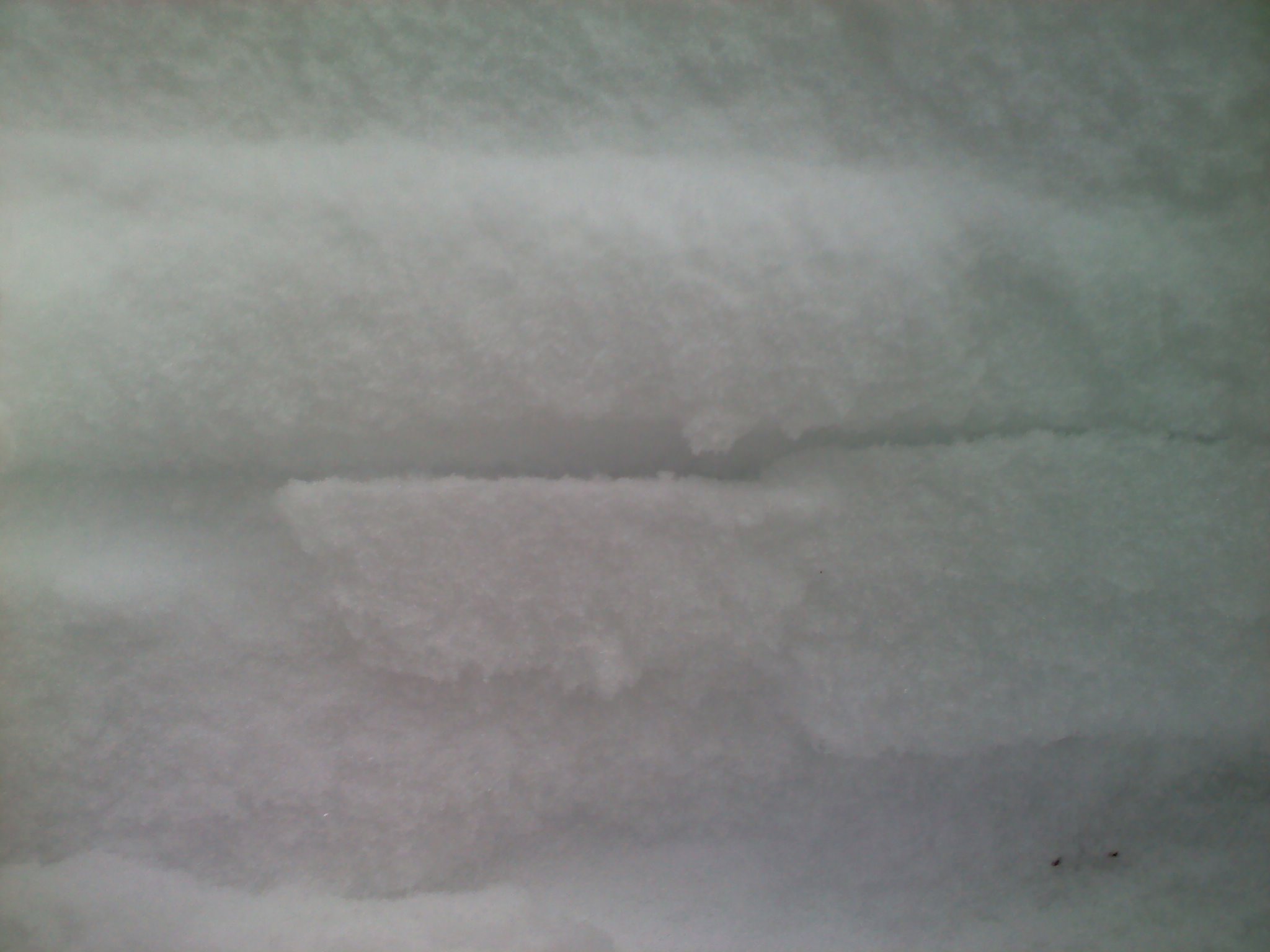
Looking at the photos, you do not need to be a snow scientist to understand what is causing the high risk conditions in our surrounding area. Keep in mind, this photo was taken on a treed northeastern slope, the same aspect as many tree lines in EV.
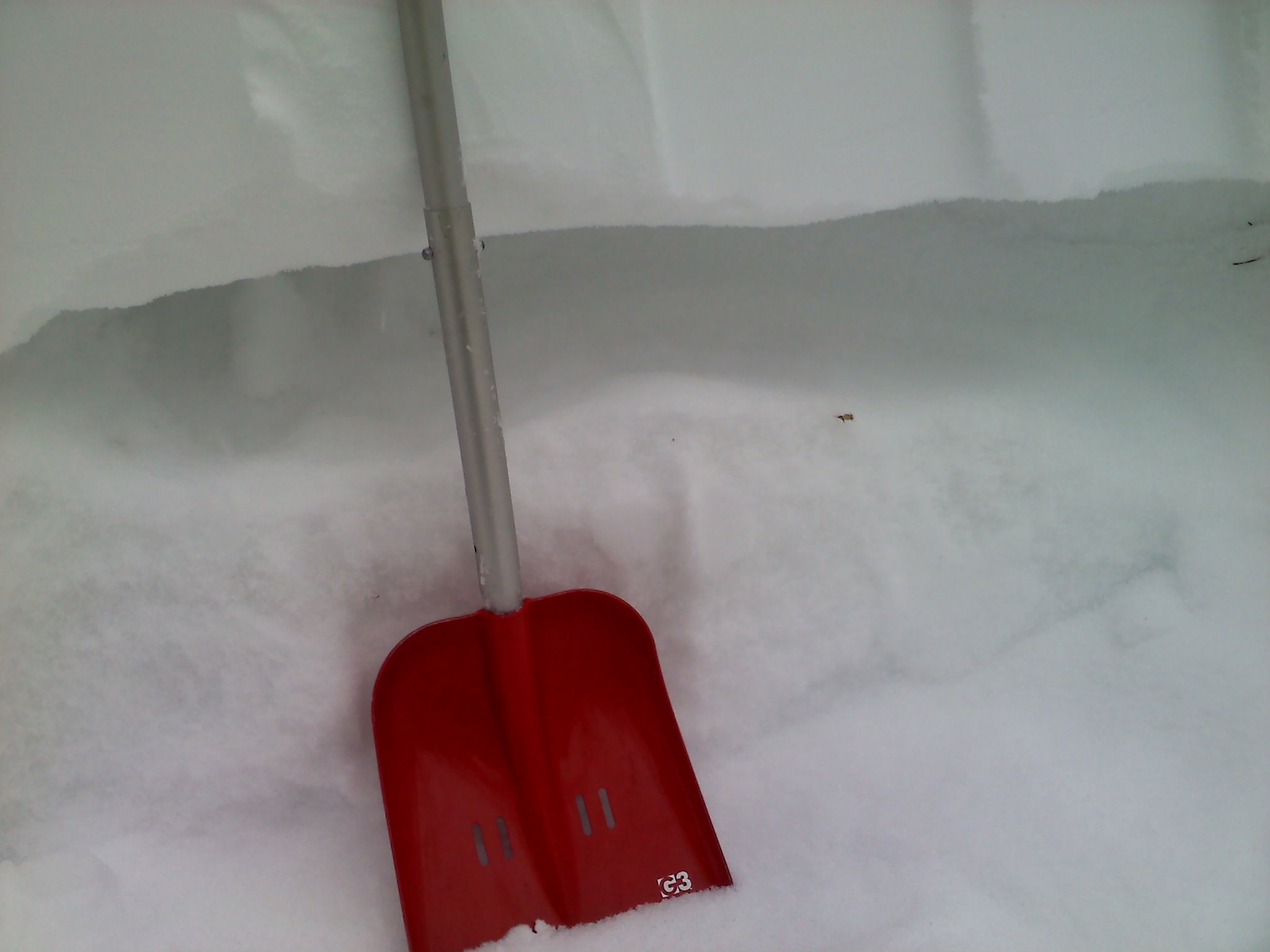
The photo above with the shovel clearly illustrates the newly fallen snow on a super consolidated layer created by warm temps and wind supported by an extremely faceted snow layer. After digging and looking at the snow I was convinced to turn around.
With the newly fallen snow Saturday night / Sunday morning, it will be hard to resist heading out for some fresh turns. The already crazy high avalanche danger persists. This pit shows that even in the trees and in areas we may think are safe, we aren’t. Stay inside the ropes for now…
1/20/12 Tele Line Revisit
Crazy swings in temperature last few days. 13 below to 40 above in a couple of days with a rain snow mix yesterday in town. Switched to snow to the valley floor sometime Thursday night and woke to two inches on my deck with warm temperatures again.
Went with my buddy Paulie out to Tele Line where we had skied the last storms’ snow on supportable crust, bypassing anything steep(30+ degrees)and north facing again. The constant weather factor for the last few days has been the jet stream wind, up again and howling on the ridges out of the northwest. Same deal today as the next front intensified around 12:30 and started dumping a heavy wet, Pac-Northwest style snow. Nice storm skin as the only two other travelers were ahead of us and disappeared into the white out above the poma.
Hitting the point, the winds were calm again as on Wednesday, and the east-facing run was slathered in twenty cms of dense new snow up top. Did a quick hasty pit, similar shallow pack as Wednesday with the new snow supported by the crust underneath. I went first, skiied through the initial rock pillows and ditched it the trees early and waited for Paulie. No activity. Paulie dropped and met me in a cluster of dense old growth. The upper section skied well and the dense snow was nice supportive powder turns of the year. Bliss.
As we entered the middle section, things changed dramatically. We leapfrogged down to the traverse out, staying next to the ridgeline. Paulie let me know he was triggering whoomphing and propagating cracks in areas that I had skied. The thirty pound differential between us was enough to make the difference and allow him to punch through the saturated crust and trigger failure. We regrouped and went farther into the old stands. Entering lower elevations and into the rain/snow mix layer from the night before, the dense new snow wasn’t adhering to the increasingly saturated melt freeze crust. Bottom line the lower we got, the higher the avalanche danger became. We were able to traverse out in cracking boot top on ground dense snow to the aspens. If we get the snow predicted on Saturday and the pack on the Benchie traverse out becomes deep enough to slide, the traverse out could be treatcherous.The aspens down low were extremely sensitive, and shooting cracks and small slab collapses were all over, even worse than the cracking on Wednesday. Again Paulie, being a beast, was triggering areas I didn’t all the way to the bus.
Snow Pack Discussion.
After Paulie triggered the whoomphing and cracking in the middle elevations of Tele Line, we staged at some trees and I crept out and dug a hasty pit. (Yep it’s a bona fide real pit with NO SAW, it actually has a place in the world of snow science.) On the go assessment. A lot going on in the 60cm snowpack. Bottom 20 cms, 3 mm loose facets. Next, a five mm melt-freeze crust, pencil hard. Following this, fifteen cms of smaller loose facets, 2 mm. On top of this, another four to five mm melt-freeze crust again, finger hard, increasingly saturated as elevations lowered. Topping the cake was the 20-25 dense wet snow in the spot I was at, a sheltered spot, east facing around the middle of the line. (the depth of new snow varied drastically in different aspects and elevations. We were on a eastern aspect, with a good view of north east.) All propagating fractures were easily Q1 shears, but didn’t run any distance.
Paulie was collapsing the crust from mid elevations down and the storm snow was running on the collapsed crust on loose facets below. Danger was even higher today, than it has been in the last few days, especially in lower elevations N-E aspects. Didn’t get to test any W aspects at any elevation recently, but I assume similar types of results. We saw evidence of slab releases in NE aspects at 9500 ft and below. Temps have cooled off since the storm moved through and have skies cleared. Hopefully this will lock up some of the moisture and settle things, but this is just spray(a new phrase I learned today).
Concerned about Saturday, weekend crowds and the lure of pow will have intrepid souls venturing back there in very high danger. Hope all goes well, please let us know if you are out and see anything. Be safe. EVI
1/18/12 Trip Report from Colby D. and Crew Snow Pit Study Equals No Go
Wanted to share this trip report from reader Colby D.:
On our way out we stopped at the BCA park n did some practice digs. We saw Paul there and said he made it out to East Vail earlier but decided to come back (red flag 1). Decided to go anyway. Once we started to go through the windloaded areas I jumped off the track to give it a feel. I felt the snow dropping with every step and in my tracks you could see almost 2 inch air pockets on both sides (red flag 2). So we quick dug a pit. Again I am not a pro and didn’t have a saw so it was a janky pit but it had all the signs saying don’t go. the top footish in the first pit didn’t even hold up and make it to a compression test, second one did but fractured on the first hit from the wrist. that alone was enough to convince us not to go but then we noticed bellow where we had stepped of our splits there were fracture marks to (red flag 3). This on top of the fact there had been slide action in the area, we hit a few fun turns through mushy trees where the snow was heavy but had no problems.
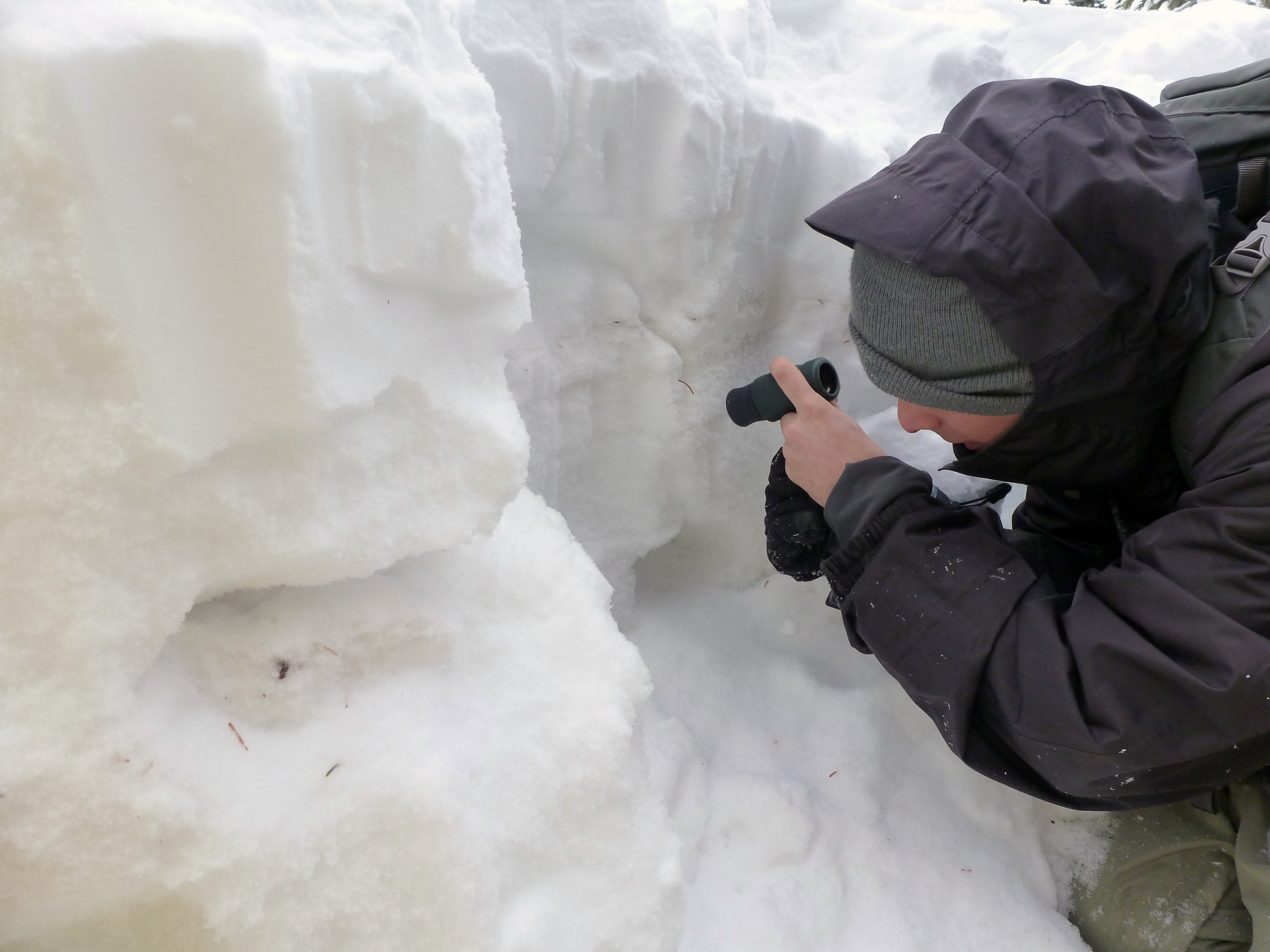
Had a single binocular which was super cool to look at the snow crystals with
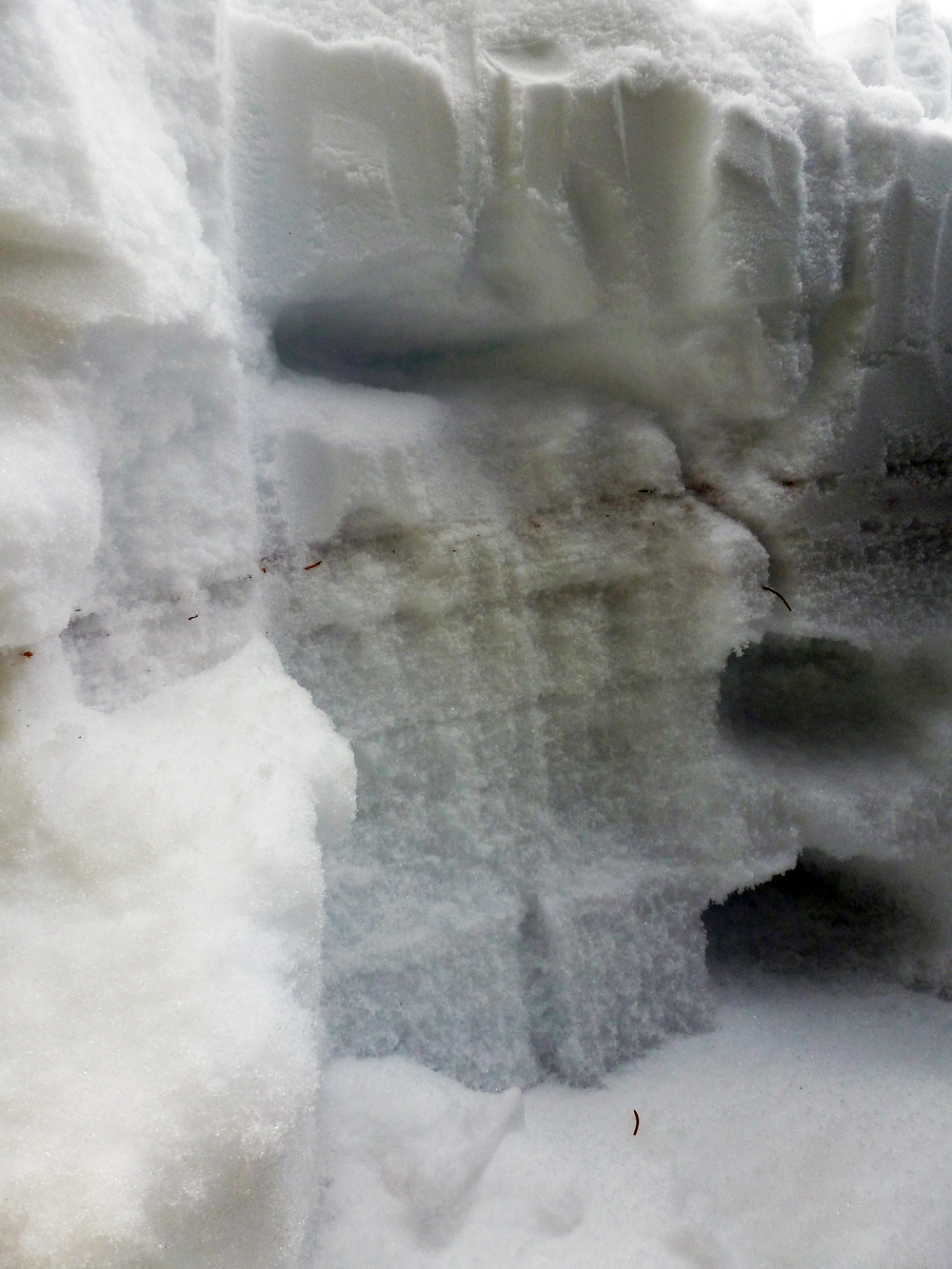
you can see the soft sugar snow under the hard layer half way up then the top is windloaded, also some punch tests
 First column attempt, we didn’t have a saw so we cut it as clean as we could but it fractured before even the first set of compression tests.

Since we decided against east vail yesterday from the top we decided to hike a run we do fairly often with the dogs. I think people refer to it as half chute. regardless we were gonna hike up through the woods as we have an established boot pack and you’re never in any high risk areas. It was a rugged hike and it seemed wicked warm today. the snow was super sticky and heavy. Once we got to the top the snow had gotten lighter so we decided to dig around and check the snow out. We had already broken the top zone into mellow sluff slides in the trees on two prior occasions so we were wondering if it was much different than the area we dug yesterday.
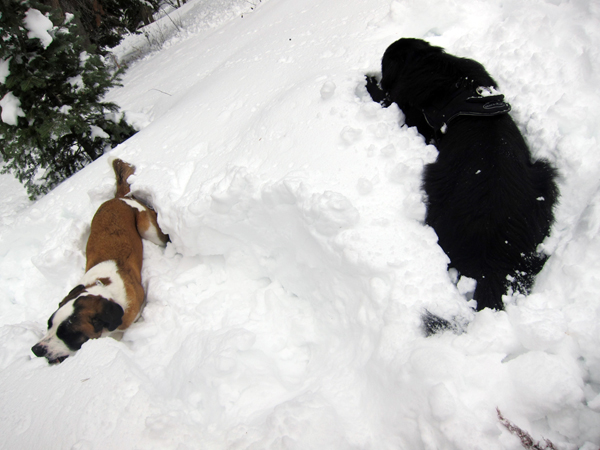
the pups loving the deep snow
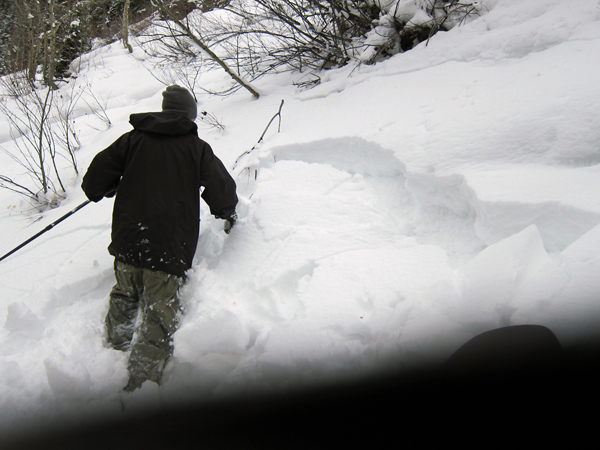
As we started clearing out the area there was a small fracture.
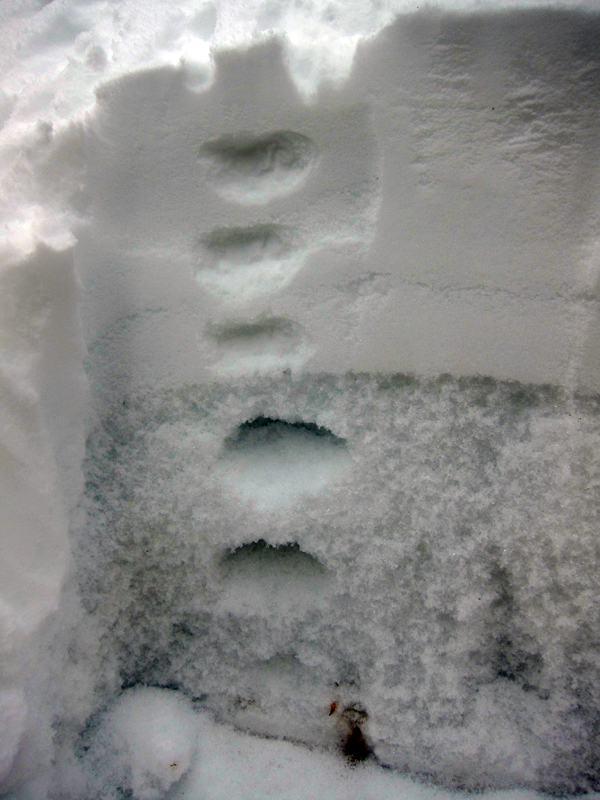
I increased the contrast on this shot and you can easily see the different layers, harder on top, softer underneath. Shitty but we came to this area because there is little consequence with the crappy pack.
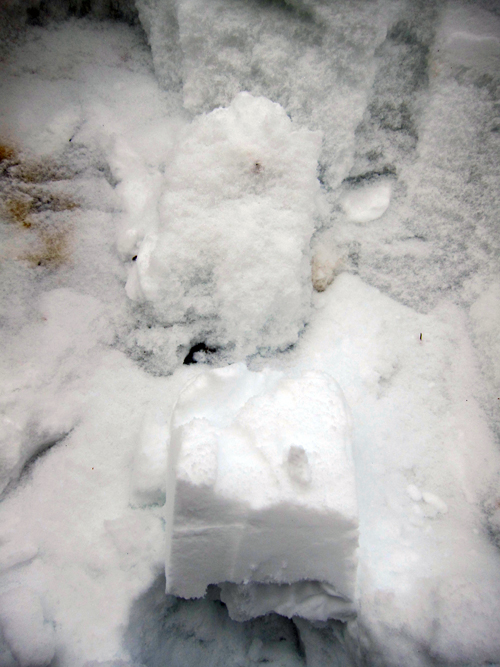
Kinda tough to tell what;s going on here but the bottom block slide of the sugar pile above it on the 7th wrist compression. Further proving the consequential areas of east vail could leave you having a real bad day.
 Brian and Goomba getting read to drop. The snow was super heavy, but it was fun and a good workout.
Thanks to Colby and his crew for the report and pics. We appreciate it andalways welcome outside content and comments-EVI
1/18/12 EV Thursday Where’s the Snow? High Avi Danger Continues
Big storm was supposedly headed our way. The jet is on us and it looked promising for last night. The blob NOAA showed us coming in from the Northwest made giddy as a schoolgirl. Huge and dipping below AK towards us, finally in a more west to east pattern. Bring it. I went to bed with powder dreams dancing in my head.
Woke up to another swing and a miss, somehow it went from 1000 percent chance of snow and a blizzard warning to really nothing. All bark no bite. A reoccurring theme this year, not sure how NOAA got it so wrong. Again. Now Saturday looks better, but, but honestly I give up on getting excited for storms that NOAA predicts for us this year.
Wednesday saw the temperatures and humidity rise with the incoming front. The recent new snow down lower in the aspens by our second run had begun to settle and were cracking, although not propagating more than a few feet as we plowed through it. A great indicator that even at lower elevations in the trees, the possibility of avalanching is on the rise. Rapid change in any piece of the avalanche puzzle weather, wind, temperature is always a warning sign for increasing avalanche danger.
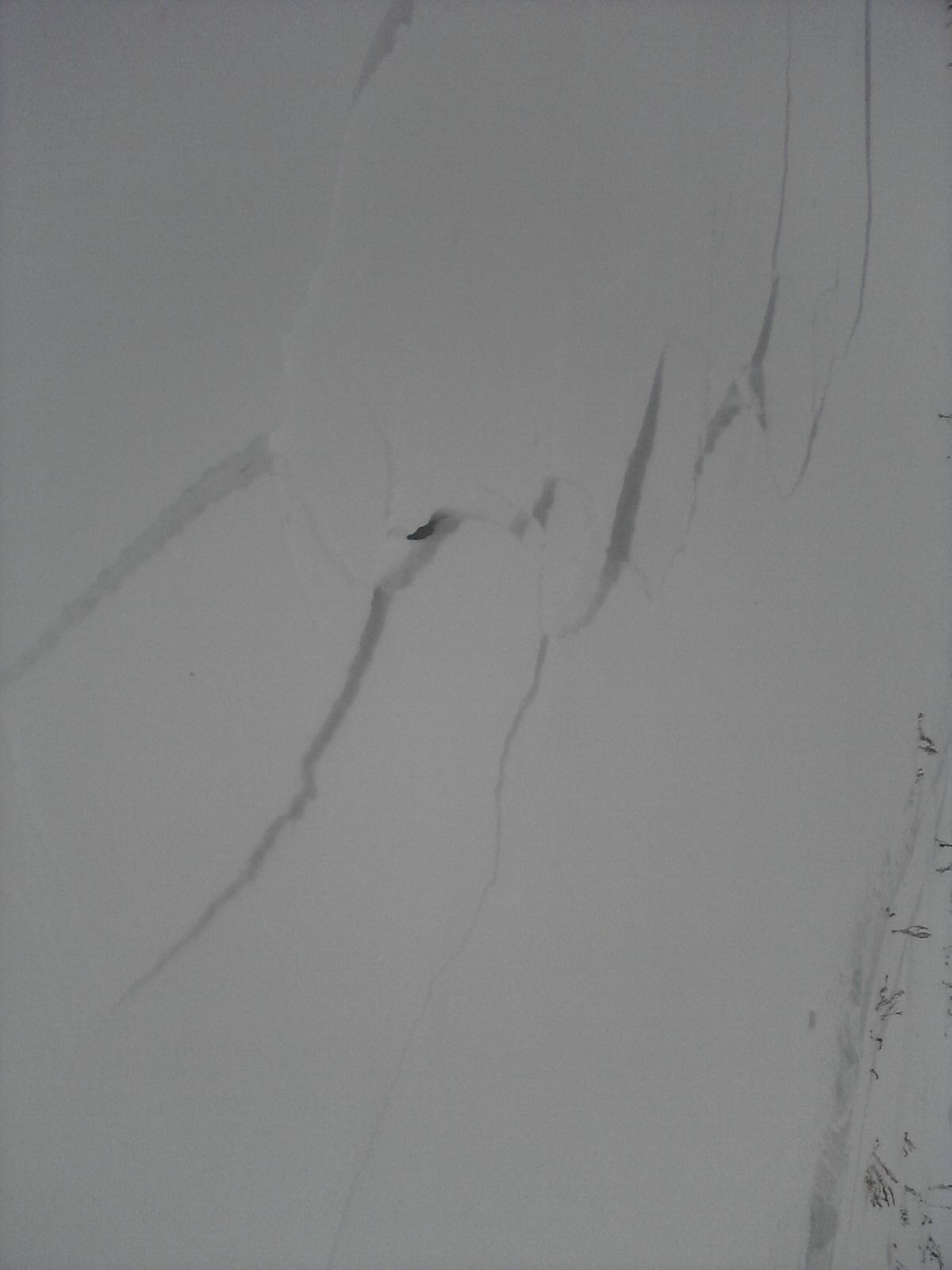
Cracks in the Trees
Winds are still up, and the loading continues. 21 is open today, so the skin out won’t be as long. Two yesterday and my legs are feeling it. Might be taking the day off and writing hate mail to NOAA. Be careful out there, anything in the North facing, wind loaded aspects that haven’t ripped have a good chance of going at all elevations. Really a strange year so far to say the least.
1/18/12 Trip Report: Tele Line
Day off from Troy’s today and I was eager to get back out to EV to see what the ten inches and jet stream winds had done to the north facing aspects of East Vail. I definitely was concerned and I had a feeling that Avi rating was easily considerable as CAIC had reported, and probably more like high danger specifically in EV due to what had been occurring weather/wind wise over the last two days. If I was heading out I was going to make damn sure I was in good company. I was. I met up with our snow science and event coordinator Luke, along with Haines heli guide extraordinaire Will at the Visti. Solid.
Spooky day all around. The constant sound of the bombs tossed by Vail Ski patrol resonated over the howling ridge top winds. The bruised, purple grey clouds thickened and lowered all day over the scoured moonscape of the Gore. Small tendrils of snow touched the tops of the peaks, but nothing from the predicted blizzard yet.
Geared up at Two Elk and we were off. The skin up to chair twenty-one was spent catching up with Will, hadn’t skied with him since Valdez. Luke and I skinned listening to stories of Haines spines, helicopters, film crews and Oakland Raiders Cheerleaders that were so over the top they had to be true.(Check out This is My Year to see what Will, Xavier De La Rue and crew and SEABA have been up to) Our storm day was rolling along. The high winds had transformed the rippling ridge lines and angular faces of the Gore Range into a peppery black, brown and white moonscape as all the storm snow that wasn”t locked down was now in Kansas.
Up behind chair twenty-one, we get our first indicator of how things are gonna be . Patrol holds us up at the backside of the lift. Blasting over in Red Square, Wayne the patroller says, fifteen minute wait. No problem, EVI has nothing but total respect for patrol, so we hung out.
I turned to check out the area behind the lift that drops into Mushroom Bowl a saw a good size slide had ripped out with Patrol’s two pound bomb. Another patroller and a Vail photographer were perched on top a hanging block checking it out. 150 ft wide, two to three feet deep winds slab failing on the old snow/new snow interface, a knife hard, wind scoured crust. It ran over the roll and into the trees. Same place behind the path to China Wall that ripped a week ago. It’s a great test slope as the 3o plus westerly winds load it fiercely. Luke Will and I took notice and headed out as soon as they let us. Wind loading was, no doubt, going to be a factor on our route decision.
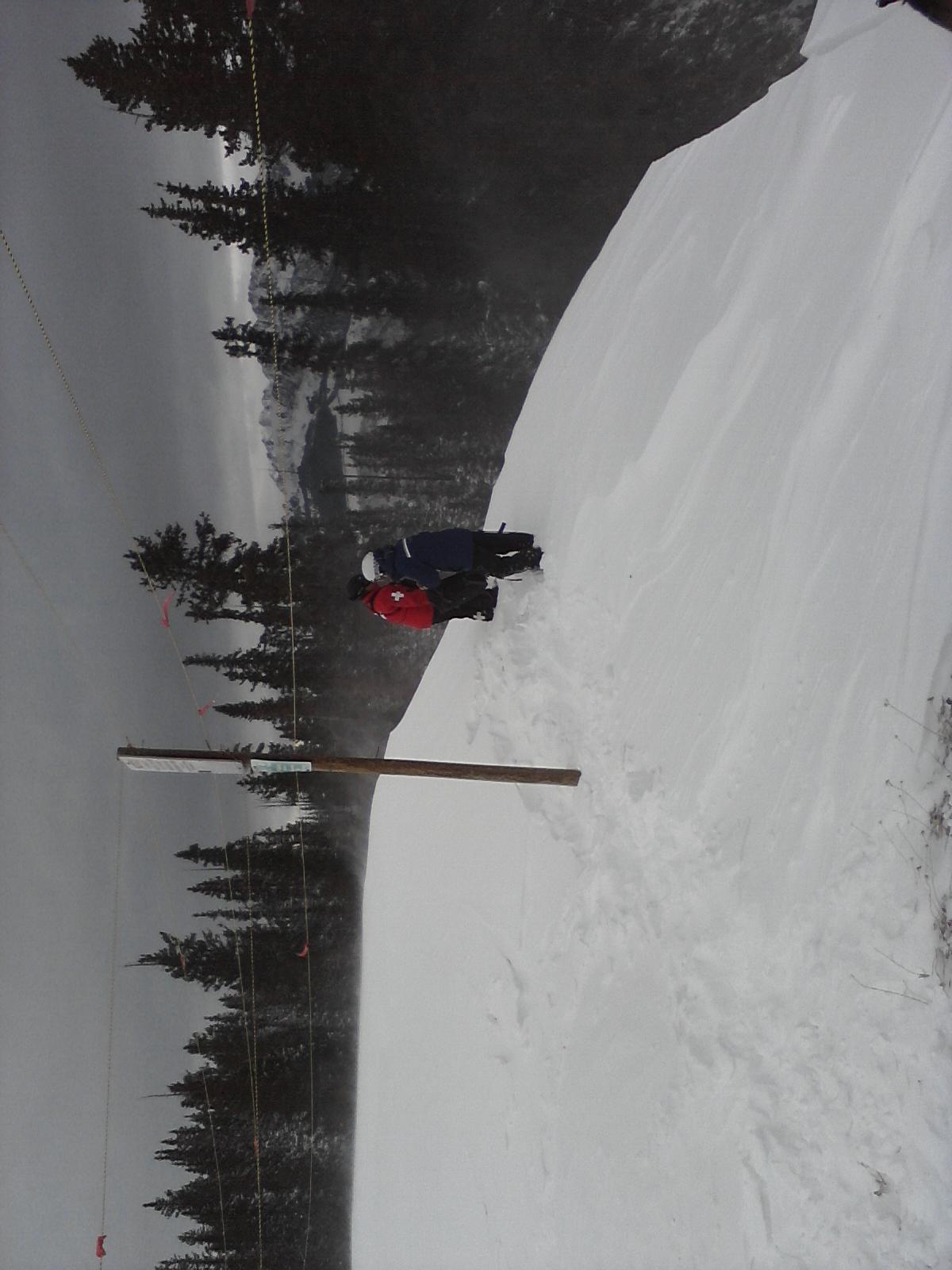
Behind Orient Express
Top of the World and we started poking around. Small cracking as Will checked out skier’s left off the top, left side of Abe’s. Punchy thigh deep on the windward, north facing Benchmark side. On the ridge top and the lee side of the ridge, it was scoured and bushes and rocks poking through, by far the thinnest I’ve ever seen EV on the Top of the World in January. We all took a look over the ridge, assessed it, then we talked about it. We decided we didn’t want to mess with the loading in the left side of Abe’s, even though other tracks were already in the far skier’s left trees of the run. We all felt pretty sure it was going to rip, probably at the first rollover that steepened to 35 degrees and had the punchy wind slab(80 plus cms)There are small shelf cliffs that make a great trigger points off the top and this area releases often after storms.
The decision was made to go ski the more sheltered and lower angle East facing run off Joint Point, the Tele Line. The snow pack was going to be shallower over there due to the East facing sunhit and lack of windload. It was coated and blank and looked like a better option.
Scooted down the ridge to the corner at Joint point. Dug a hasty pit. The snow pack was weak of course, but very shallow, 30 cms and had new snow over a condensed crust over 2 mm facets. Better than off the top of Benchmark. Pulled out the handle of Little Pepe, and offered the drop to Will. Skipping over the stepdown, snow coated rocks, Will took off down the left side. The snow held with variable boot top to knee fresh on a thin pack. Luke dropped next, me last. Regrouped and leapfrogged down the pitch. Powder??? Dense, wind affected but yes, it counts. Finally, after all this wait. Thank you baby Jesus( I had to work the ten inch day morning).
Made our way down through soft snow on tops of the dead grasses to the aspen cut over, ignoring the now familiar sound of rock grinding edge (my route involved twenty-five yards of ski hiking a new sport) and picked our way to the bus. The out is still a pain in the ass. Nice trip and at the bus we all agreed that we made the best of what was available and headed in to town, John pulling up at the moment we stepped out of our skis.
Second round I met up with Tom and Stew from Snowell at the Poma shack and with the first run info we all decided to roll back to Tele Line. Had gotten a text on the Visti from J that his group (just after us in the morning) had skied left side Benchmark(Abrahams’) and had ripped out a quarter of the bowl while poking around on the edge. It broke below them and no one was caught. Eager to see the aftermath, I hustled ahead to the TOTW and rolled over the edge to see a 100 ft wide eighteen inch to two foot crown starting from the ridge over the Mushroom Rock area, stepping down. It rolled past the flats and through the second cliff band, to the next flats. Again the interface betweenpencil/ knife hard scoured scarp covered with the recent windslab was the culprit, triggered by the weight of a skier at the cliffs. HS-AS-R2-D2-I (look it up on Google).
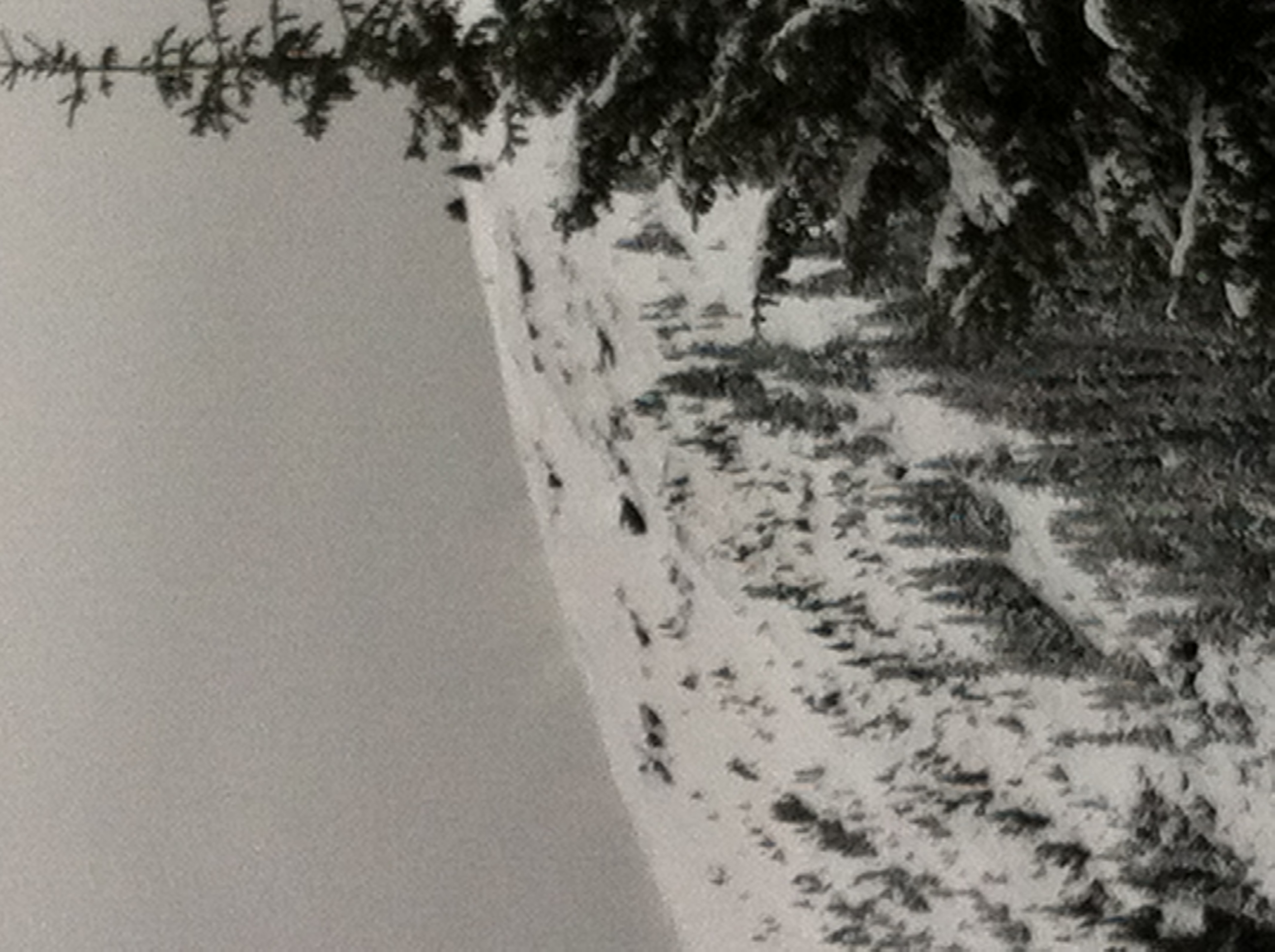
Benchmark slide photo (courtesy of Tom Birmingham)
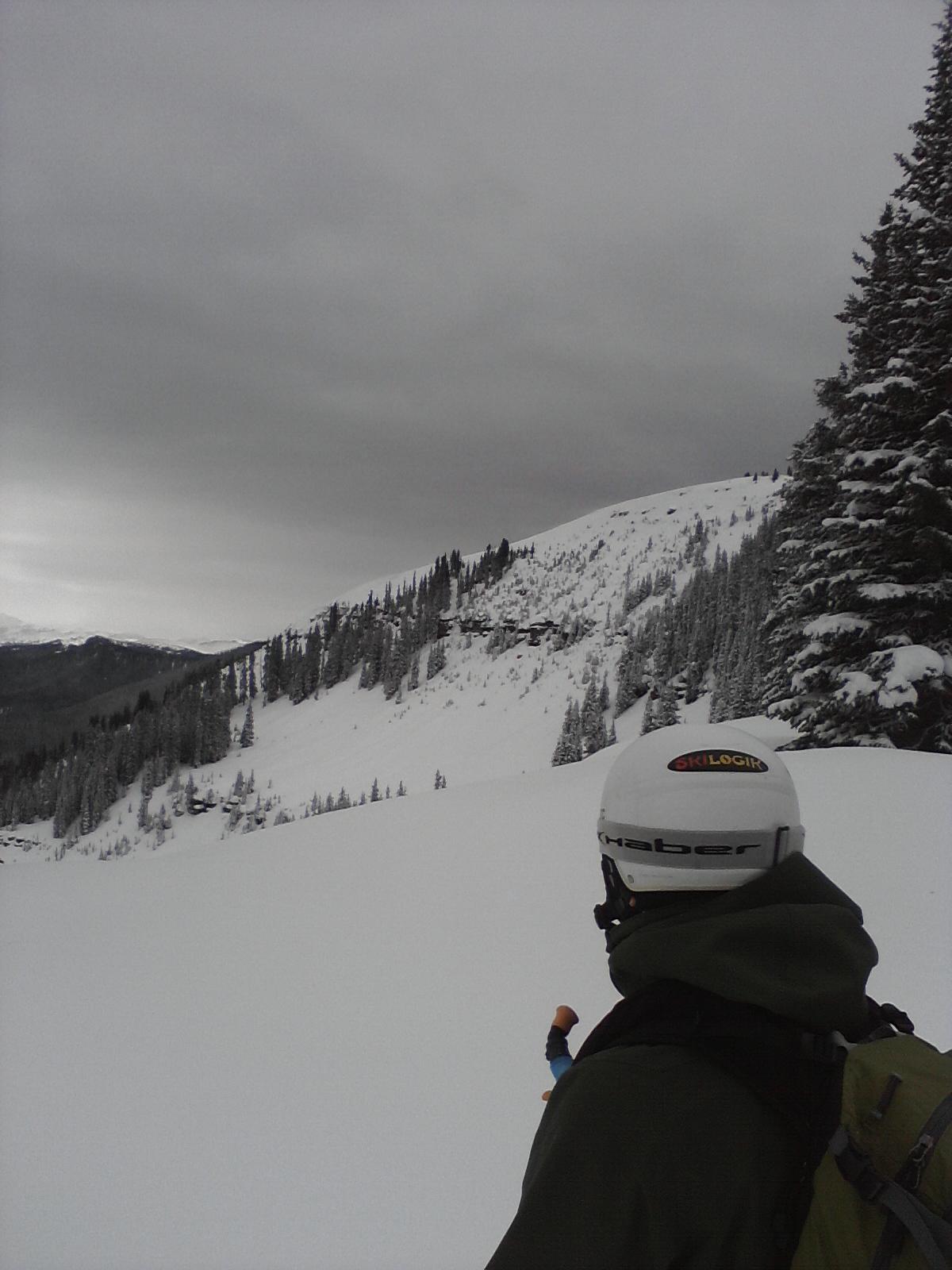
Checking It Out
Second Tele line was just as good as the first. Both Tom and Stew seemed glad to get the first run monkey off their backs for the season. Again the East face held the snow and no activity and blissfully out of the wind. Thanks to them for letting me tag along with their group and for the pictures.
1/17/12 Boom Goes the Dynamite
Pass it to the man and boom goes the dynamite! Finally, a no doubter. The last of the MLK weekenders returned their stuff at Troy’s ski shop today as the snow fell and the weather was in and out all day. ( the best shop by far in the valley, especially for fat ski lovers, shameless plug here). I had a couple of 303er’s bitching that the storm “had passed through and is over Winter Park now.” Obviously, if you didn’t know, the weather patterns and storms are synced to the vacation plans of our guests. I would have to guess the two had Winter Park plans for a mid-week escape from the Front Range. “Marge, cancel my appointments, Goddammit I’m gonna go ski Mary Jane.” Who was I to crap on their sandwich? Inside I chuckled a little, as the storm was barely even there as these guys departed back down the hill around noon. Now it’s 11 pm here in EV and the wind and snow continues( I’m sure it’s dumping at Winter Park, too, it’s o.k guys).
On a much more serious note, the accumulation is getting there, upwards of ten inches up top by now with significant wind loading. I didn’t head out today, so I have no new beta on what is going on in EV. I do, however, have a good idea what tomorrow will bring. Hopefully the arenas we need to rip will release naturally tonight during the storm, but that really is just hoping. Throwing out the black flag guys all aspects elevations, which means if you are planning to head out you need to have your stuff wired tight. I’ll go out on a limb and predict that we will see significant avalanche activity in the next 24-48 hours based on the weak base, the new fresh snow availible for transport and the forecast for 30 to 40 mph winds. Boom.
It’s zero to a hundred in a day, and by being lulled in to complacency by months of no snow, this is a dangerous time for us backcountry travelers still getting the feet wet in the midst of a storm on a bad snow pack. Let’s look out for each other out there and use good protocol. Deep breath, ready, go.
1/16/12 Avi Warning for EV- beacon training

Well I guess the prayer worked, as the snow started falling around seven a.m. at my place in East Vail. Spent yesterday at the beacon park at top of Sourdough lift with my buddy Paul, who was off to the Peter Esten hut on Monday. It had been awhile since I had practiced intensely with my beacon and I was eager to try out my Tracker 2. I think overall most backcountry users, myself included, don’t practice beacon searches enough. There is also a contingent that treats them like an amulet, something that you turn on and forget, hoping it wards off the avalanches, with really no clue how to use them. I challenge all of us to get out and practice, especially in the face of the incoming storms and the avi warning issued for the Vail area.
A beautiful bluebird, insanely crowded day was a perfect opportunity to try out the BCA beacon park. Paul and I went through several mock scenarios, including multiple burials. We also had a guest appearance by local shralper Nathan Cook, 12, who has skied EV 3 times and wanted to get some practice in . I gave him my beacon and let him at it. His time would put most backcountry “experts” to shame. Nice work Nathan!
The biggest factor in a recovery is the human one, as even in practice sessions your heart rate soars and stress level rises. Imagine now how much that would be intensified if it was real and your friend was dying. Practice is essential to learn to operate a beacon effectively in a life or death situation when things are hitting the fan. With such a top-notch beacon practice area, there is really no excuse for any of us in the EV community not to be proficient. Under three minutes is a good goal for a single burial. Multiple burials are more complex and pose difficult choices for a single rescuer. When practicing, try to make it as real as possible. Make up a story, outline the “avi path” give your rescuer details about slide width, direction and last seen point.
Heres a quick overview of what should be the basic progression of a response to an avalanche accident if you are responding.
First, yell AVALANCHE!. Let everyone know, even if you are alone, do it. Next, mark your last seen point of you victim. You don’t want to waste valuable time searching above this point. Before you head to that point, turn your beacon to receive and make sure all of your party does the same. Turn and watch them do it. Would hate to be chasing another rescuer around while someone is waiting to breathe.
Have your probe ready and initiate the search. Stay on you skis and ski to the last seen point in the slide path. Start zig zagging back and forth twenty meters apart, ten meters from the sides of the avalanche until you get a signal, then use your recently honed beacon skills to zero in on the signal. Check every piece of ski equipment and clothing you might come across, as someone might be attached to that glove, that ski. Once you get within five to ten meters of the signal, get off your equipment and start your fine search using the grid method to pin point the smallest reading and begin probing. Probe in a concentric circle twelve inches apart until you get a strike. Practicing probing is very important so you can “feel” what it’s like to strike a backpack or wood practice box. Once you have a strike, LEAVE THE PROBE IN and begin digging. Do not dig straight down, but excavate the area to the downhill side of the strike and use the conveyor belt method(check out the you tube video on this). Get to the person’s head and get them breathing.
In a multiple burial, if you can turn off their beacon as well, that can only help you. Depending on the size of your group, the number of initial rescuers is up to you, but I would say two at the most, bring the rest down after you have located the victim. In a massive avalanche multiple initial searchers might be required. Having someone stay on top to act as a scene commander and a safety for you is a good idea if you can. Also as you are working on the excavation, make sure your equipment is accounted for and recognizable as yours, not to be confused with victim’s equipment for searchers coming on scene. Do not pee in the area, as if dogs are needed this will throw em off.
Multiple burials are a tough situation. That is why protocol is so important to keep only one person at risk at a time. Locating a person with multiple signals going off, especially in close proximity, takes practice and knowledge of that little sp button on your Tracker 2. Won’t go into it too much here, but research it and practice it these scenarios on your own. I found my Tracker 2 to be fast easy to use. I had been using a DTS for a long time and the improvement in range and speed was noticeable. I always like the simplicity of the Tracker, as it makes it easy for even novices to use. To many bells and whistles can get confusing, even for experienced rescuers.
I was stoked on the session, even more stoked to see a young warrior come out and practice with us old EV curmudgeons. As we move into the EV season, with the jones as high as the avi danger is going to be, please remember the old saying “the avalanche doesn’t care if you’re an expert.” Be safe everyone, enjoy the pow, see you out there.
From Russia with love
Lots of on the ground reports lately…but we recently came across a more forward looking snow/weather report. Via the caic Facebook page, this very scientific look at the changing weather pattern appears promising. Read the details here: http://bit.ly/xair18
In short, it looks like what we’ve been predicting…a change around January 15 for the better. Colder temps and more northwesterly snow flows headed our way…or so we hope. Either way, worth a wade through the scientific talk to learn a bit more about our weather pattern this year. From Russia with love.
A historic shift at this point in the season would be great. Here’s to a February where we don’t see the sun.
Friends…

 East Vail Institute